In Bali, a small factory built by migrants turns soybeans into livelihoods.
Let’s step into Ibu Maemunah’s factory, where 100 trays of tofu are produced each day.
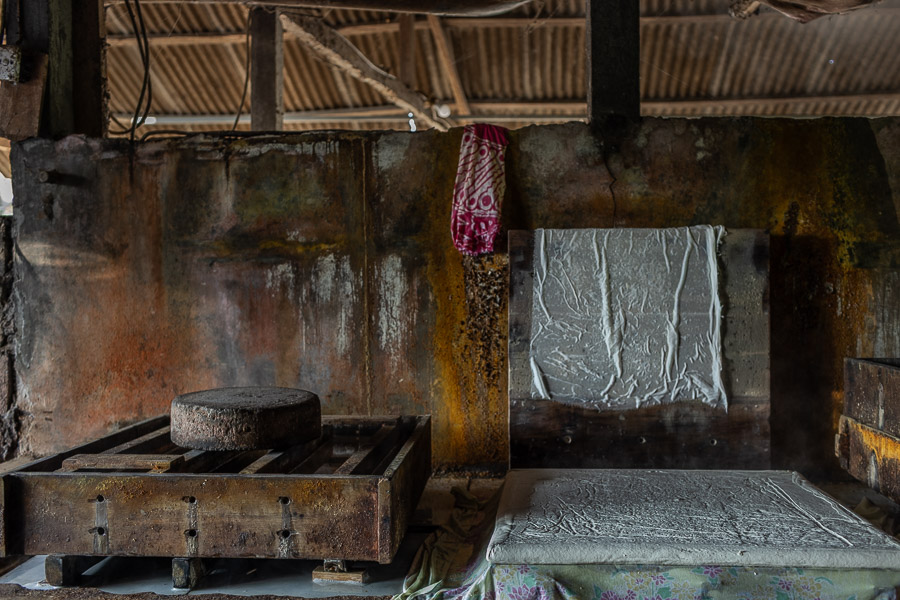
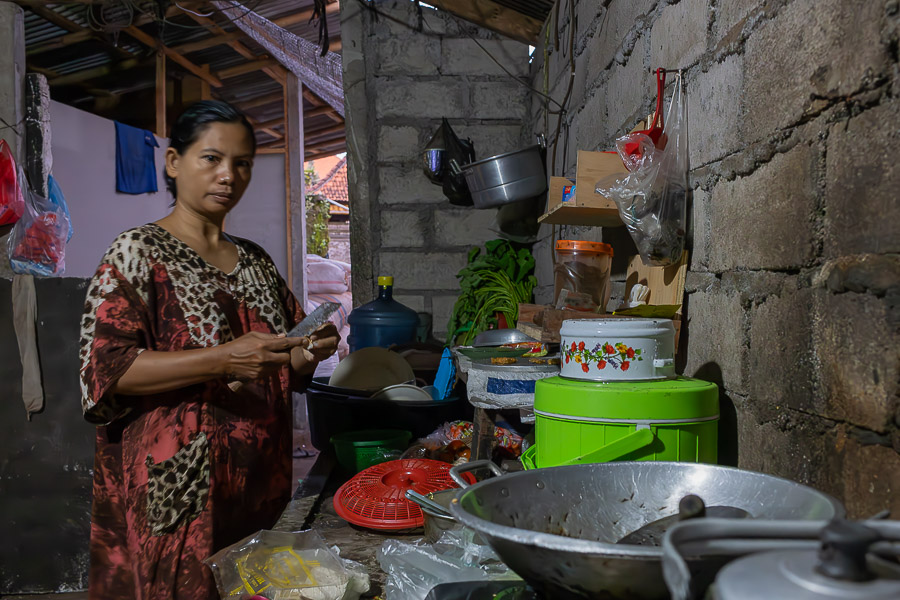
Maemunah was once a preschool teacher in Lombok. Today she runs a small tofu business in Bali. She is the boss, managing suppliers, overseeing workers, doing the accounts, and managing the sellers who distribute her tofu in local markets.
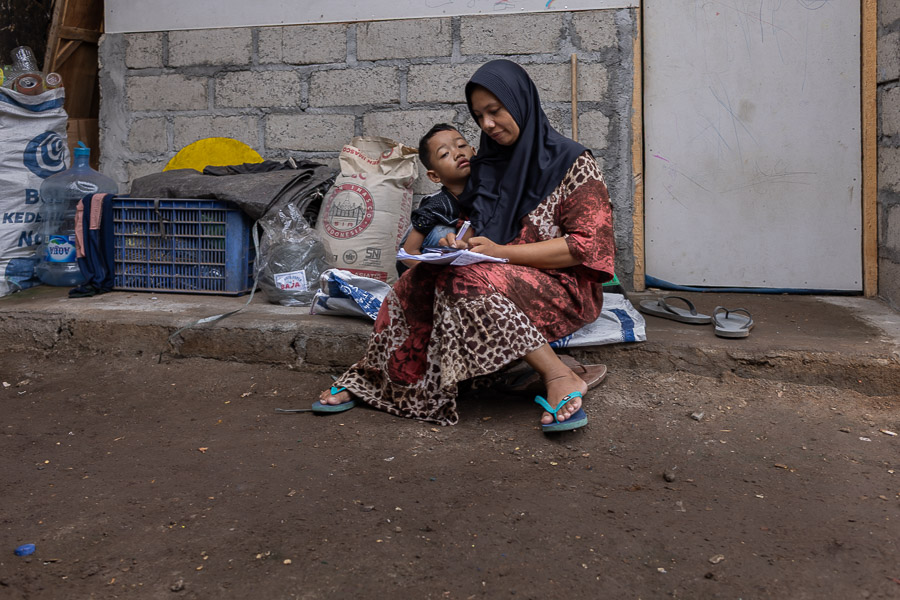
Her employees respect her deeply. They all come from Lombok as well. They found the job through personal connections: relatives, neighbours, friends from the same villages. When one person finds work, others follow. Social ties reduce uncertainty for both employer and worker.
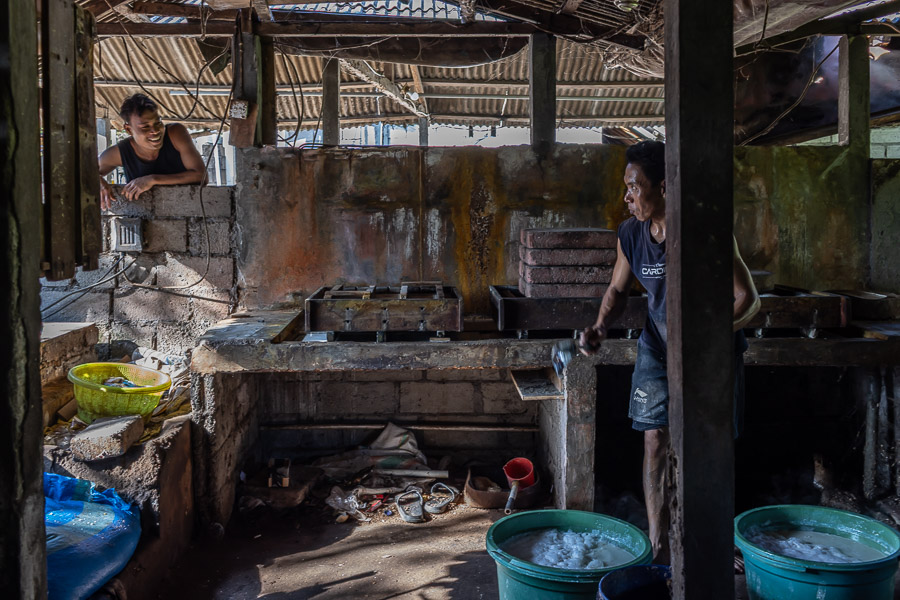
Maemunah’s husband learned tofu-making as a factory worker. He understands every stage of production because he once did it himself. From a worker, he is now a boss. Opening their own factory was a step built on experience.
Some of their workers now talk about following that path. They watch closely, save what they can, and imagine one day opening a factory of their own.
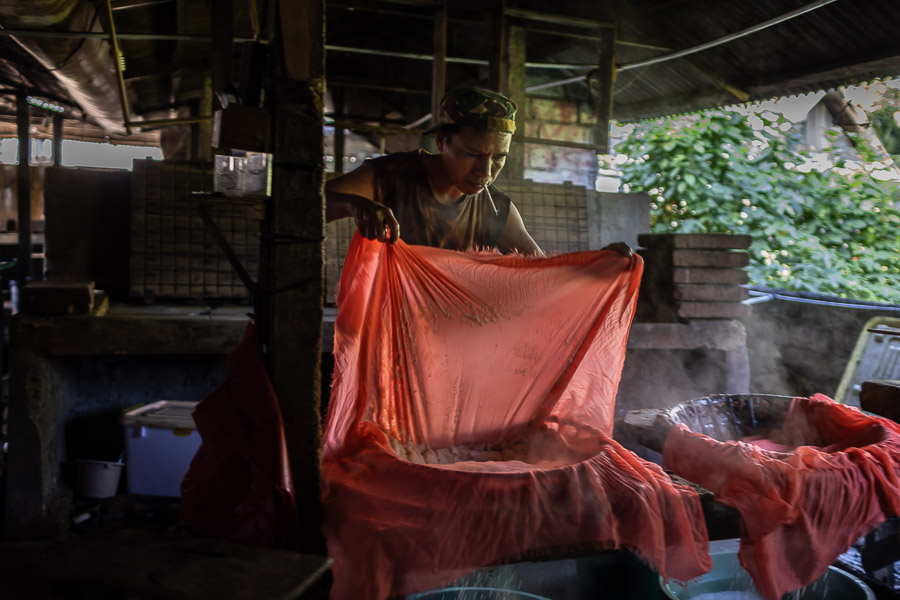
Maemunah manages all the finances. The factory rent is 10 million rupiah a year (approx USD 600). Setting it up required borrowing from family, since access to formal credit was limited. Production costs are high, and profit margins are narrow. They spend around 12 million rupiah (approx USD 700) monthly for 3 tonnes of soybeans.
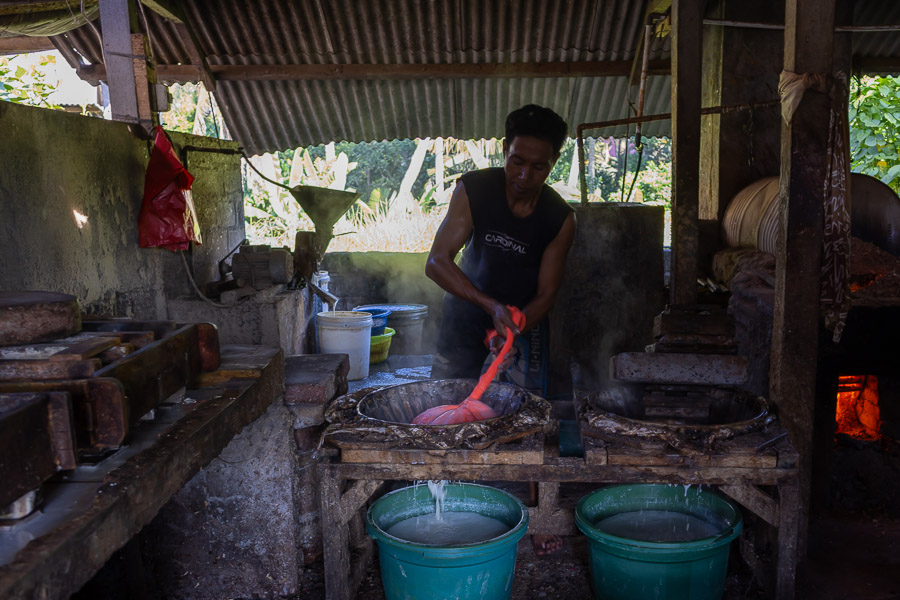
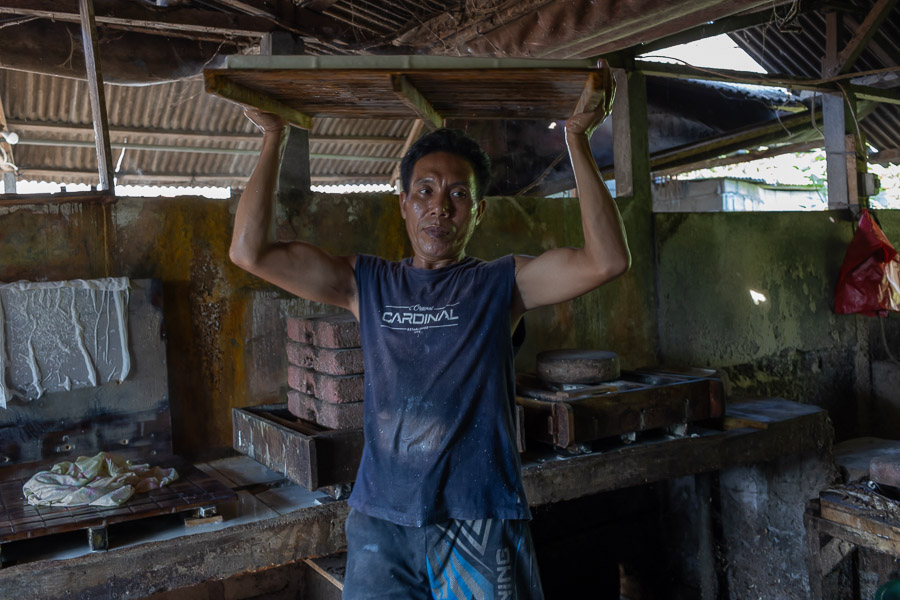
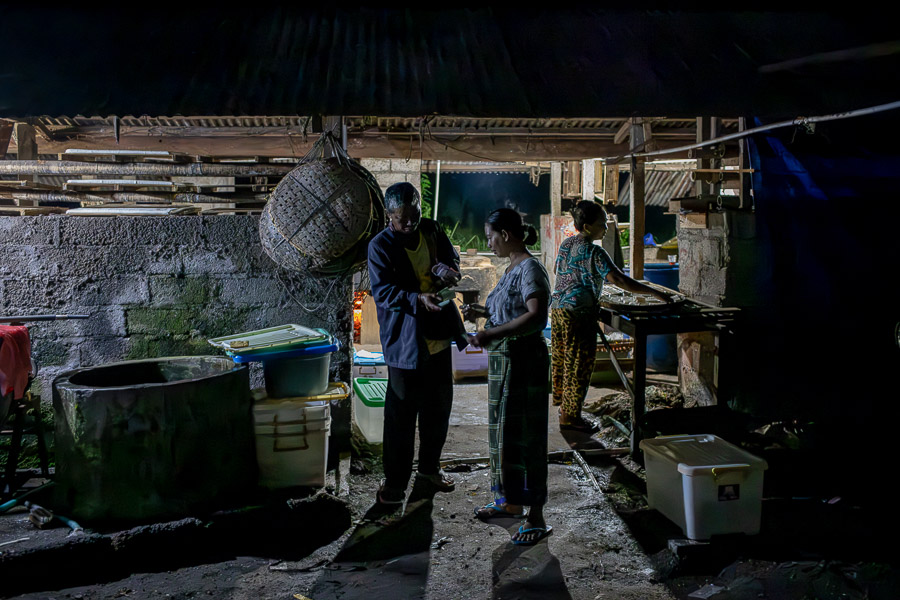
Each worker earns 125,000 rupiah per day (approx USD 7), a higher wage than they would receive in Lombok. The work is demanding. Soybeans arrive in heavy sacks. Steam fills the room as vats boil. Tofu must be cut, stacked, and packed while the night is still dark. Ady has been doing this work for 20 years; his movements are steady and economical, shaped by repetition.
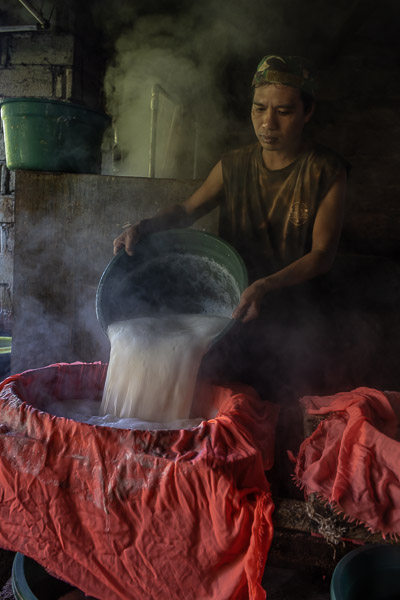
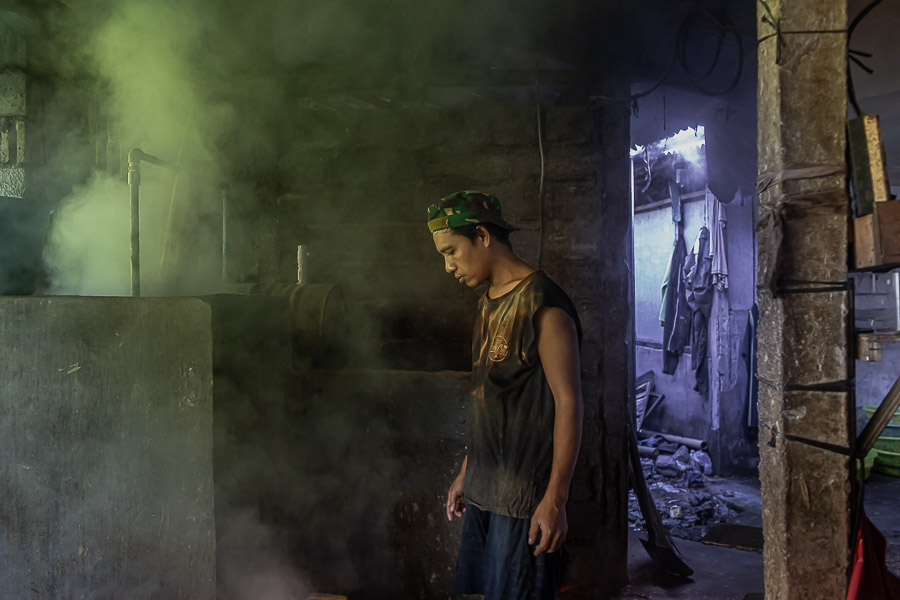
Maemunah cooks for the workers daily, lowering their food expenses and keeping the team together during long shifts. She also gives them cigarettes and coffee- as this is a habitual way for people to relax.
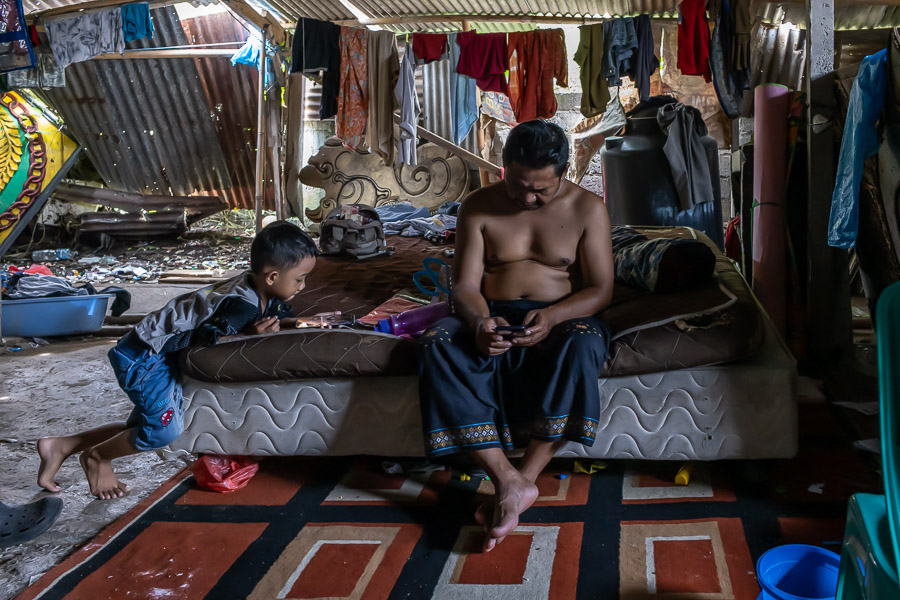
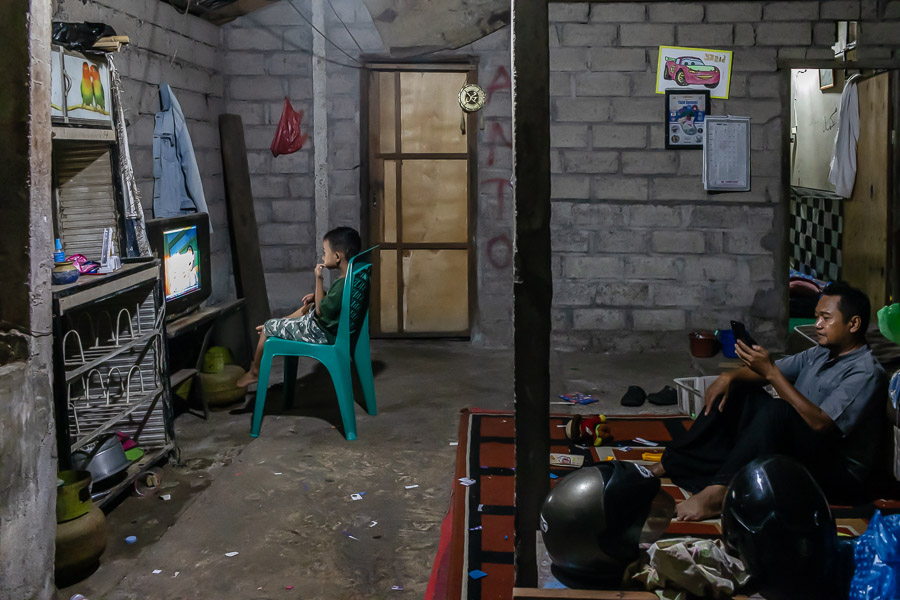
While she works, her husband entertains their child in their room, each absorbed in their screens.
By 2.00a.m., deliveries begin. Fresh tofu is loaded onto a truck and sent out to markets across the area.
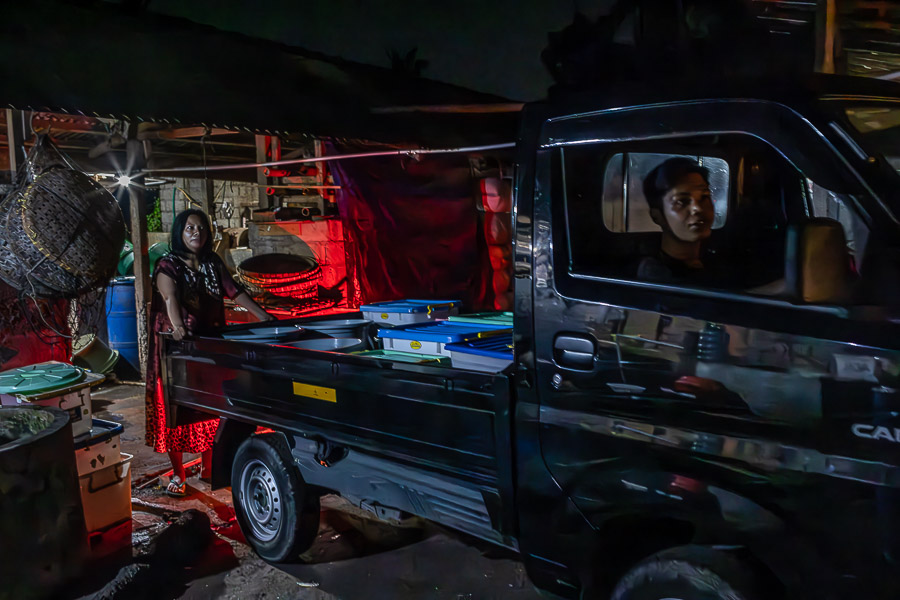
Her husband sometimes sits at a stall himself, selling directly from his buckets. In a business of this scale, owners remain part of the labour force.
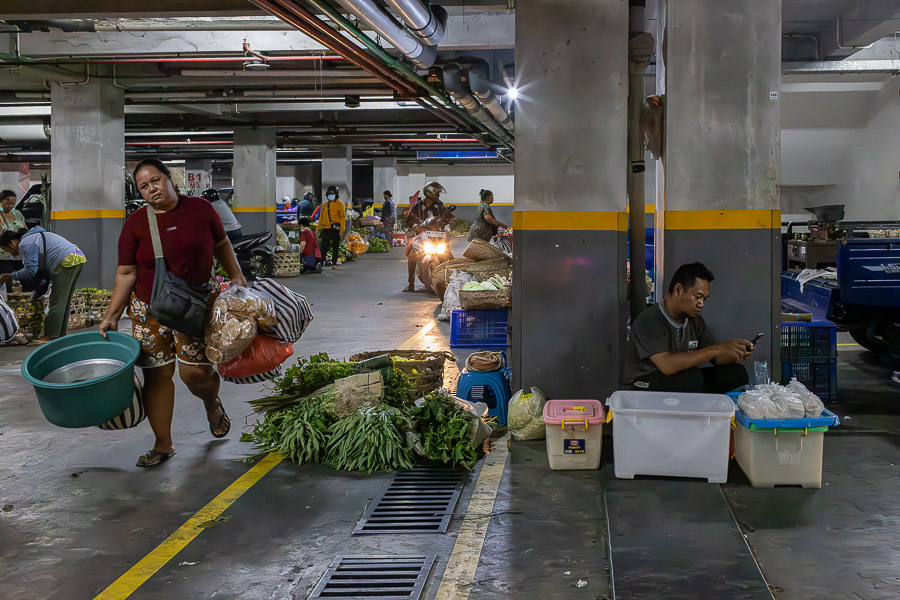
As the night stretches on, the street vendors return one by one. Earlier that morning, they collected the tofu without paying upfront. Many of them have no savings. So, Maemunah generously allows them to sell first and pay later. Now they come back to hand over her share of the profits.
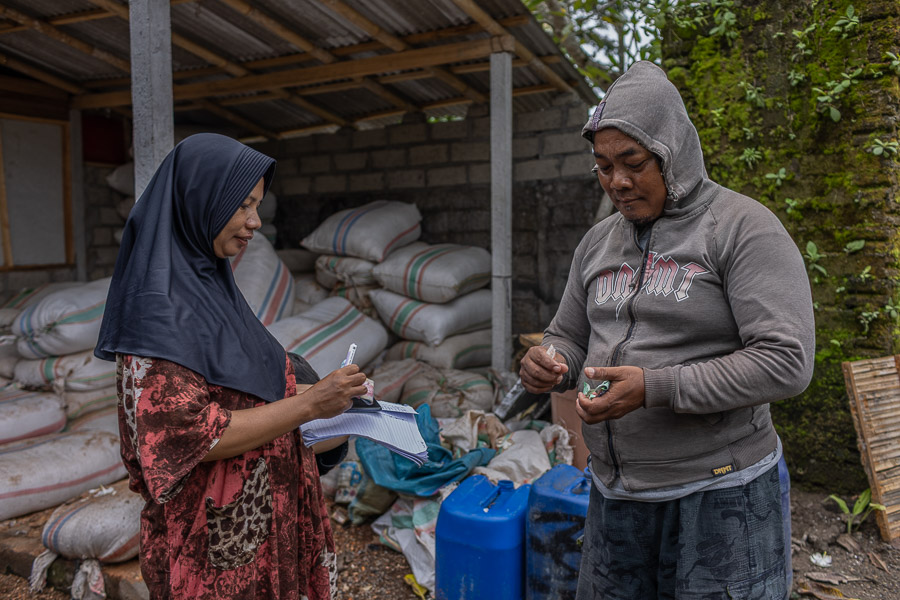
There are no formal contracts. The system depends on trust and repetition. It allows people who might otherwise be unemployed to earn income by selling her tofu.
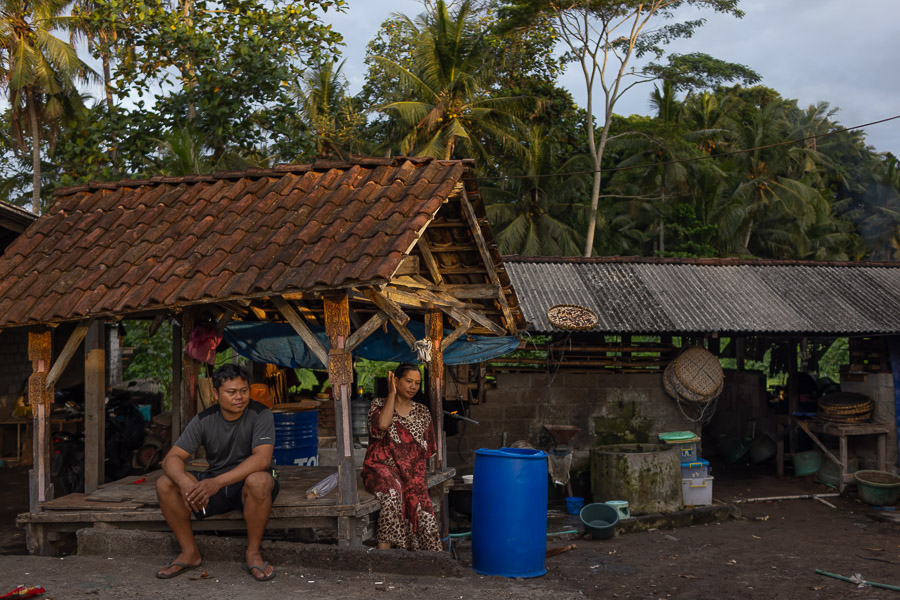
The work is hard for everyone. At sunset, a small pondok in front of the factory becomes a shared lounge to sit and rest. The production floor stands directly behind them. There is no separate office, no gate marking rank or status.
As the night winds on, workers retreat to their rooms. Music drifts though the air: they strum their guitar and sing. Others scroll through TikTok, the glow of their phones lighting their faces. Some of the workers sleep at the factory, provided by Maemunah to help them save costs and time. It is both workplace and living space.
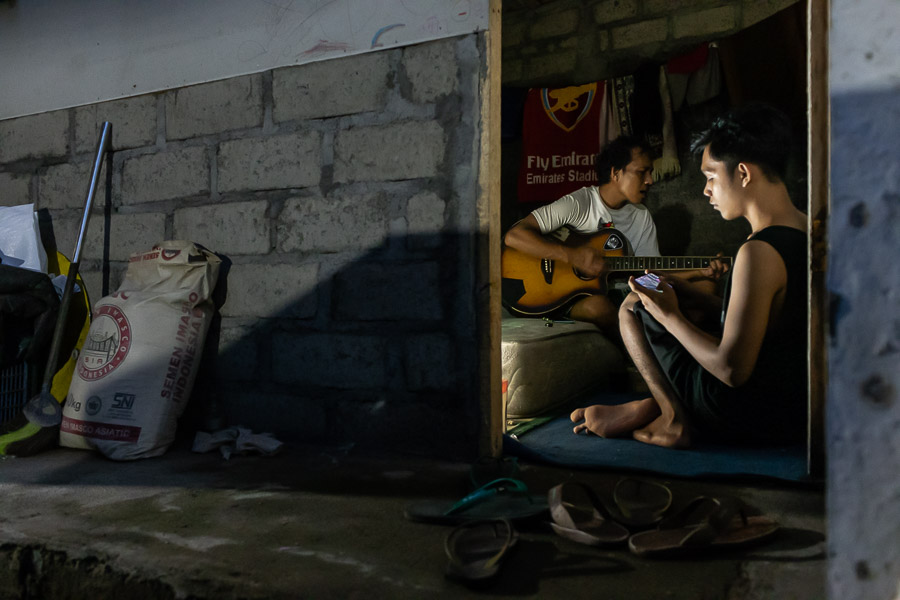
Seen up close, this factory reveals how small enterprises operate through migration networks, family loans, shared housing, and everyday trust.
Few would call it spectacular. Yet, it works. More than machines and capital, it works because of a close-knit social system that assembles labour, loans, and trust into something tangible that thousands of people rely upon each day…
Tofu.
About this story
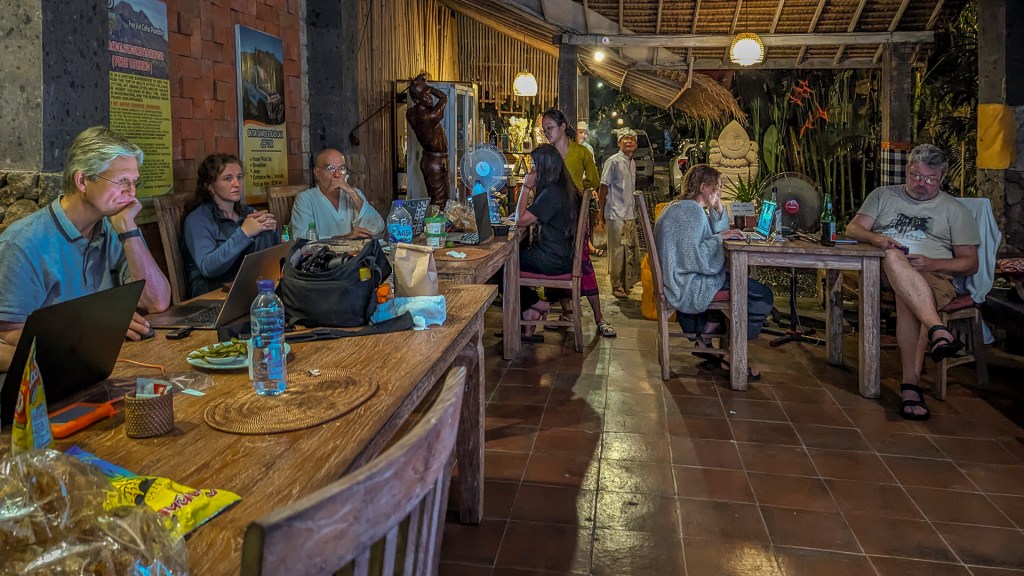
This work developed during John Stanmeyer Visual Storytelling Workshop in 2024. His guidance— and the “editing therapy” sessions where he worked with photographers one by one— shaped the way our photography and stories evolved. What I loved most was that the learning went far beyond photography and editing; it was about feeling the energy, being present, and interacting with the world with more intention.
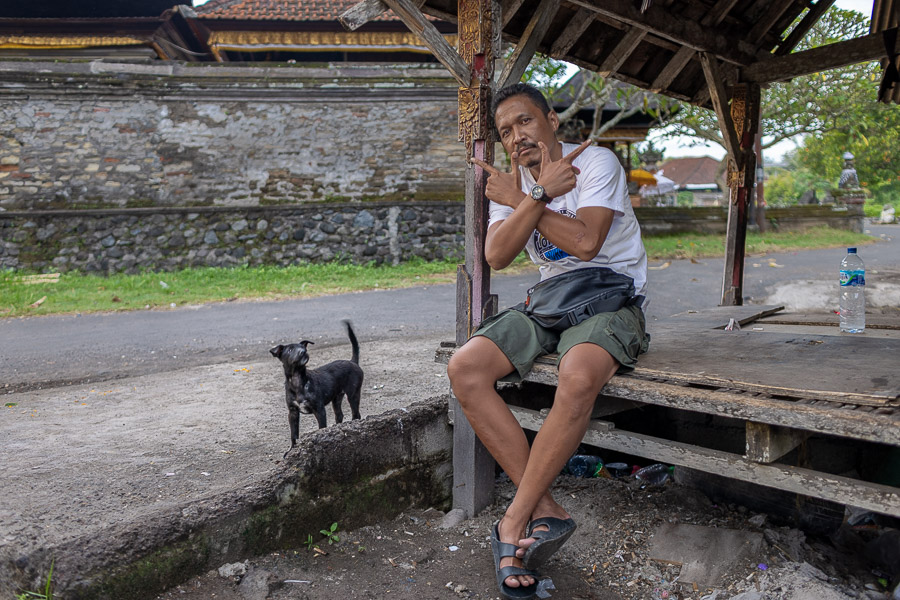
Of course, a story like this would simply not be possible without a fixer who knows the lay of the land, dissolves language barriers, and joins the adventure. I want to express my heartfelt gratitude to Putu for being such an incredible project guide! You can reach out to him whenever you’re in need of a wonderful guide and driver in Bali.
 Shopkeeper Stories
Leave a comment