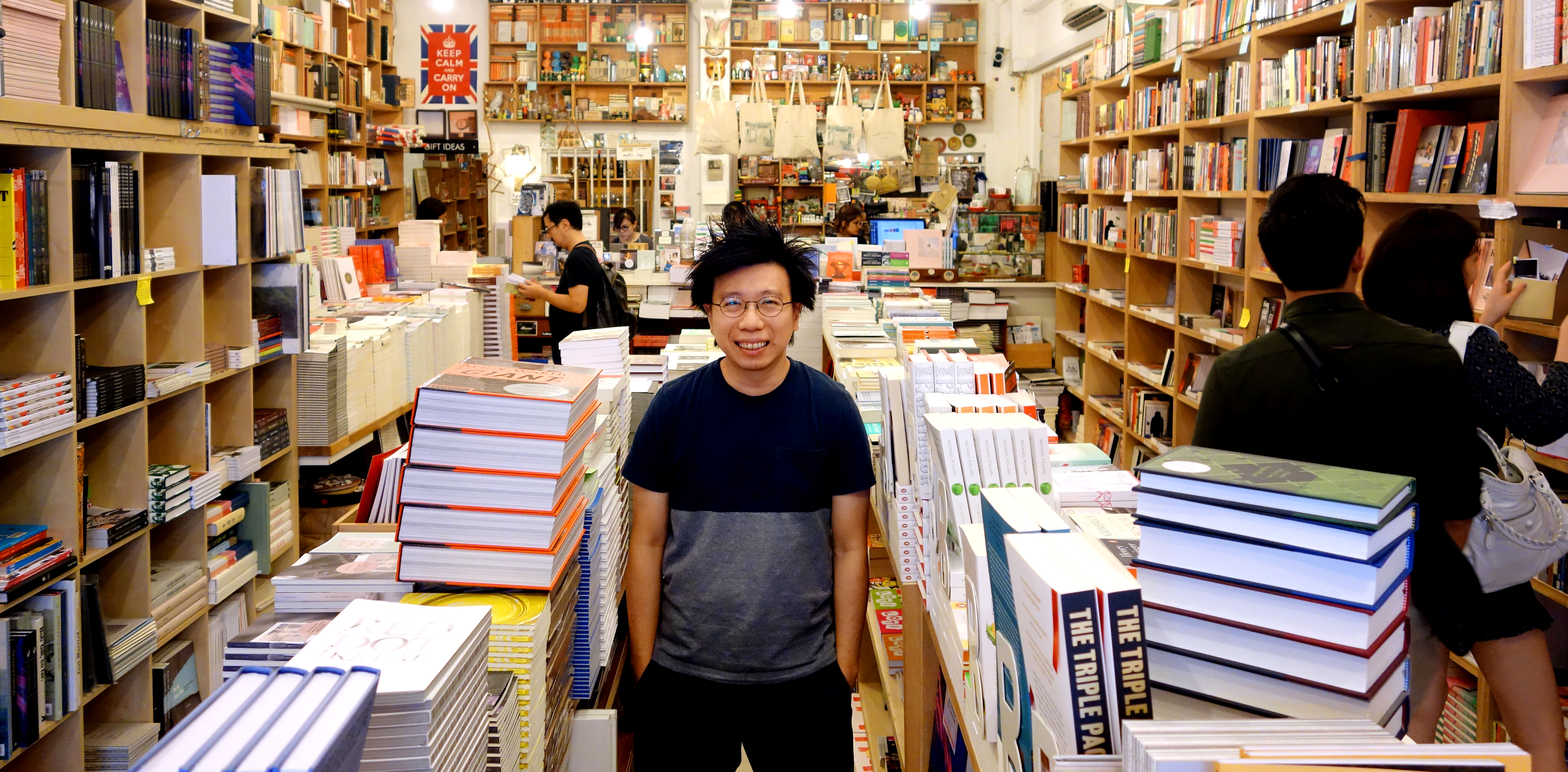
Kenny Leck runs an iconic store in Singapore called BooksActually. It is a local bookstore that specializes in carefully curated books, vintage goods, and odds-and-ends that book lovers universally tend to love. They offer an assortment of items such as notebooks, tote bags, and sealing wax, celebrating the art of writing and communication.
BooksActually has an inspiring story behind its humble beginnings. Kenny and his team started their journey as nomads, selling books from a folding table. Over time, their passion for books and commitment to the business has led them on an incredible evolution, as they strive to find a permanent home for their beloved store.
In this in-depth interview, Kenny Leck shares his insights into the book trade and imparts savvy business tips. He discusses the challenges they have faced along the way and the determination they have poured into making BooksActually a thriving “living entity” and a community hub.
Table of Contents
1. Start small as a nomadic seller to keep upfront costs low
2. Invest in a location that reflects the brand’s character
3. Got high costs? Accept the creative challenge to surpass it
4. Stand out in the market by prioritising unique products
5. Create a workspace where you personally love to spend time
6. Rising rents are universal, so feel free to keep moving
7. Even booksellers have to be capitalists. Don’t whine.
8. Aim to secure ownership of your store’s property
9. Learn from successful chains rather than complain about them
10. Keep your opening hours consistent
11. Give people something new to discover with interesting merchandise
12. Foster a “sense of discovery” that keeps people browsing
13. Taking your cue from publishers about the pricing
14. Set prices based on market dynamics
15. Don’t engage in a price war; it hurts everyone!
16. Minor mark-ups can substantially offset operational costs
17. Maximise your profit margin for each product
18. Create a visual experience to sell as much as possible
19. Explore upstream avenues to generate more value
20. Seek partnerships with other stable businesses
21. Run events so that people know about your products
22. Create communities and rapport through your business
23. Learn to be sustainable rather than depend on grants
24. Find creative ways to inspire “visual recall” to leave a lasting impression on customers. You want to drive long-term sales.
25. Running a business is tough. So, toughen up.
Want to discover the best local authors and other precious reading fuel?
1. Start small as a nomadic seller to keep upfront costs low
I started working at bookstores right after National Service: first at Tower Books and then Borders. I was looking for a job, and it was natural for me to enter the book trade because reading was part of my life.
I always wanted to run my own business, so I spent a year and a half figuring out whether I should do it. I thought I could just start selling books, but it never took off – just planning, thinking, and working with ideas.
Then one day, my friend from the literary society of NUS (National University of Singapore) told me that they were renting tables to sell books in the foyer. The overhead was quite low at $40 a table— so, $80 for two tables—and I was easily making a couple of hundred a day. After this, we went on to sell books at other schools and polytechnics through their student clubs. So, we started off very nomadic.
2. Invest in a location that reflects the brand’s character
We spent Wednesdays to Fridays selling books at NUS, and explored shops to rent on the other days. It never crossed our minds to rent from a shopping mall, because it didn’t have the same character as the street-facing shops that you see on Haji Lane and Ann Siang Hill.
Our property agent, Sofiah, found us a second-story shop at Telok Ayer for $1,700. It was the cheapest she could find! We only had $1,000 in the bank, but we took a blind leap of faith and went for it. Sofiah took this leap of faith with us, and helped us pay our two-month deposit, as long as we paid our first month’s rent.
I borrowed $3,400 from my father, and Karen used up $20,000 that her mother had set aside for her university education. We spent this money on the bookshelves and stock.
3. Got high costs? Accept the creative challenge to surpass it
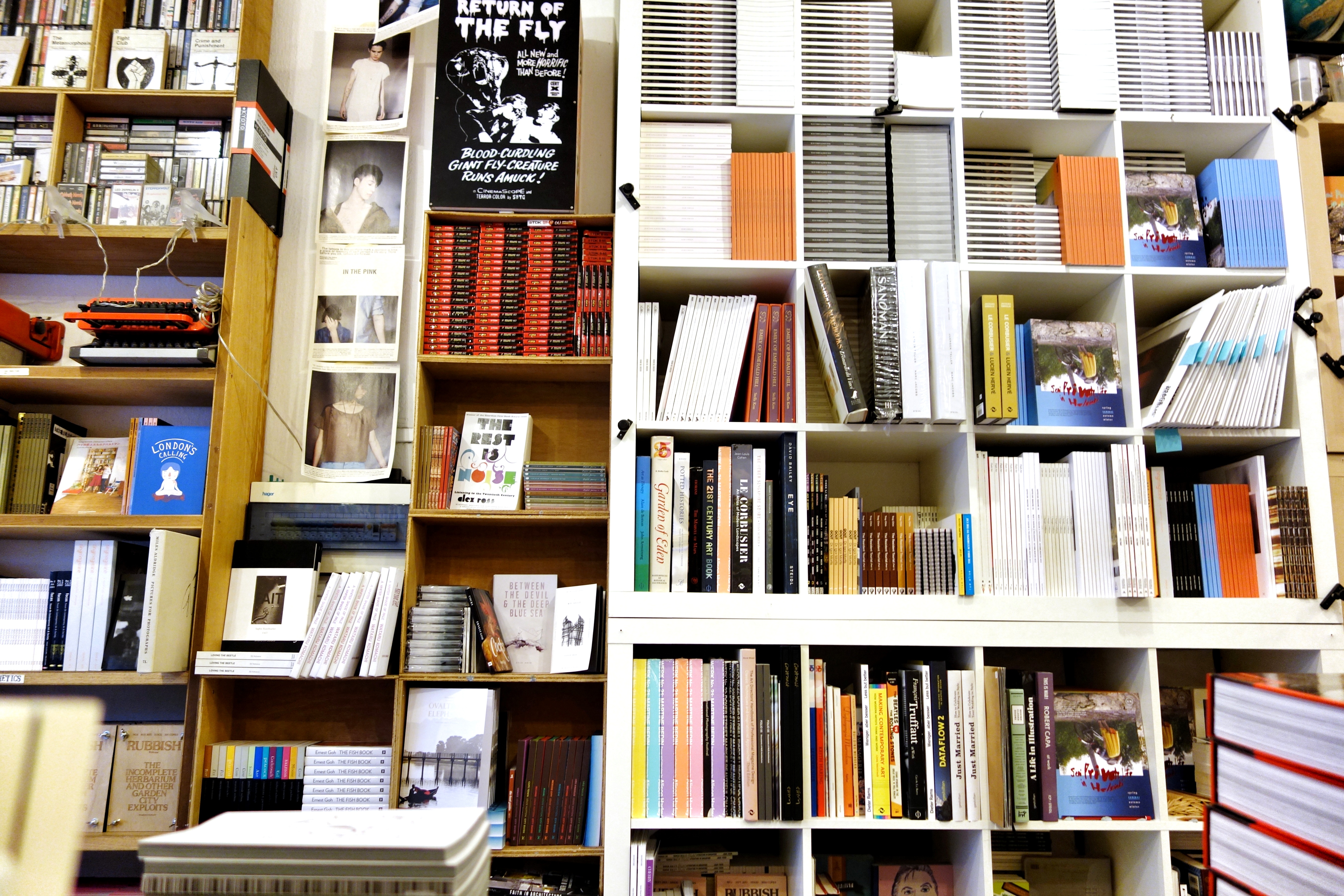
The first two years at the shop were so challenging! It made us think—are we really cut out for this? We just had to snap out of it and remind ourselves that this was a commitment we had made: to open the doors every day, show up, and work our way through it. The place was very sparse, and it was hard to convince people to come upstairs to the second floor!
We finally decided to move to Ann Siang Hill where the rent was $7,000. It was crazy to rent a place for that high when our gross sales was only around $8,000 to $9,000. But we decided to take that risk, and it gave us totally different numbers to work with.
From there we moved to Club Street, and when that lease was up, we came here to Tiong Bahru.
4. Stand out in the market by prioritising unique products
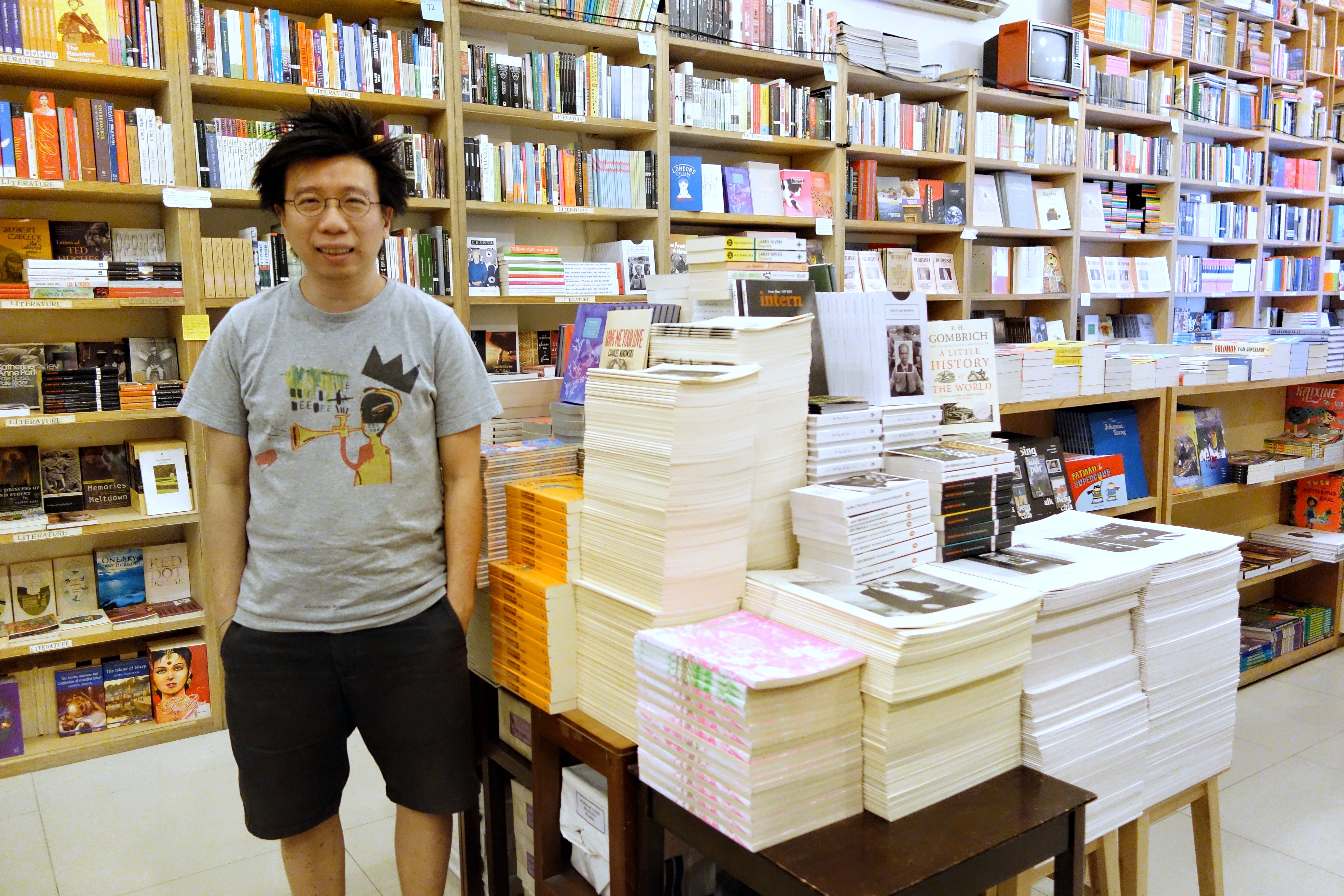
There are two ways to do book buying. Buy everything in a catalog, or, flip through the catalog and ask: do we really want to order these? More often than not, booksellers around the world choose the former: they simply order everything— because it can be returned, anyway, if it doesn’t sell. But, if you do this, you will destroy your merchandising. We have only so much budget to buy books. If I spend my budget on Harry Potter and not Harry Truman and the Struggle for Racial Justice… then, what’s so special about this bookstore? The best part of running this business is that everyone gets inspired by different things. We hope to sell you good books, say, Noam Chomsky on Palestine. When I get ten copies and ten different people buy it — whether you are 10 years old or 80 years old — I hope you will gain the perspective that they’re not enemies.

5. Create a workspace where you personally love to spend time
Setting up a bookstore first and foremost is for our own personal comfort. We have to be happy with the space. If not, we can’t pump in the work 24/7 to do the work we need to do. The physicality is just for personal selfish reasons to have a place we can call our own, and this selfish reason has a price: we need to pay the rent. Different decision-making offers different results. We just happened to choose this particular option.
6. Rising rents are universal, so feel free to keep moving
We shifted four times, and three of these times was because they increased the rent. So we just needed to find a place that was more sustainable. But, this is the same deal for every trade: we are all facing the same problems! It’s just that bookshops get more airtime when they close.
We booksellers are living in a very delusional world where we feel the whole world is oppressing against us, the landlords are against us, when actually… it is the landlord’s prerogative to increase their returns.

7. Even booksellers have to be capitalists. Don’t whine.
The day you sign up, you are in it for business. This is a for-profit, not a non-profit. Why should a landlord have a vested interest in making sure you exist just because you are doing something related to the arts? The landlord has a family, has kids, and the next generation to think about. Unless the landlord has a philanthropic nature, then I’ll say: you are damn lucky. Good on you! But, 99% of the time, you aren’t going to get that, because that’s how the business world works.
Booksellers forget that when they start a bookstore, you are doing a business, and your business is subject to these conditions. It’s subject to big hits, and small hits.
It’s as though some people see bookselling as a damn holy profession. I’m like, come’on. The people who are doing good work are people saving lives. They are literally saving lives. They should be given more support. Not us.
8. Aim to secure ownership of your store’s property
Rent is one of our biggest headaches. The solution is to buy our own property and get a mortgage, so it’s an asset. We identified the problem and we know the solution, so we’re working toward it.
9. Learn from successful chains rather than complain about them
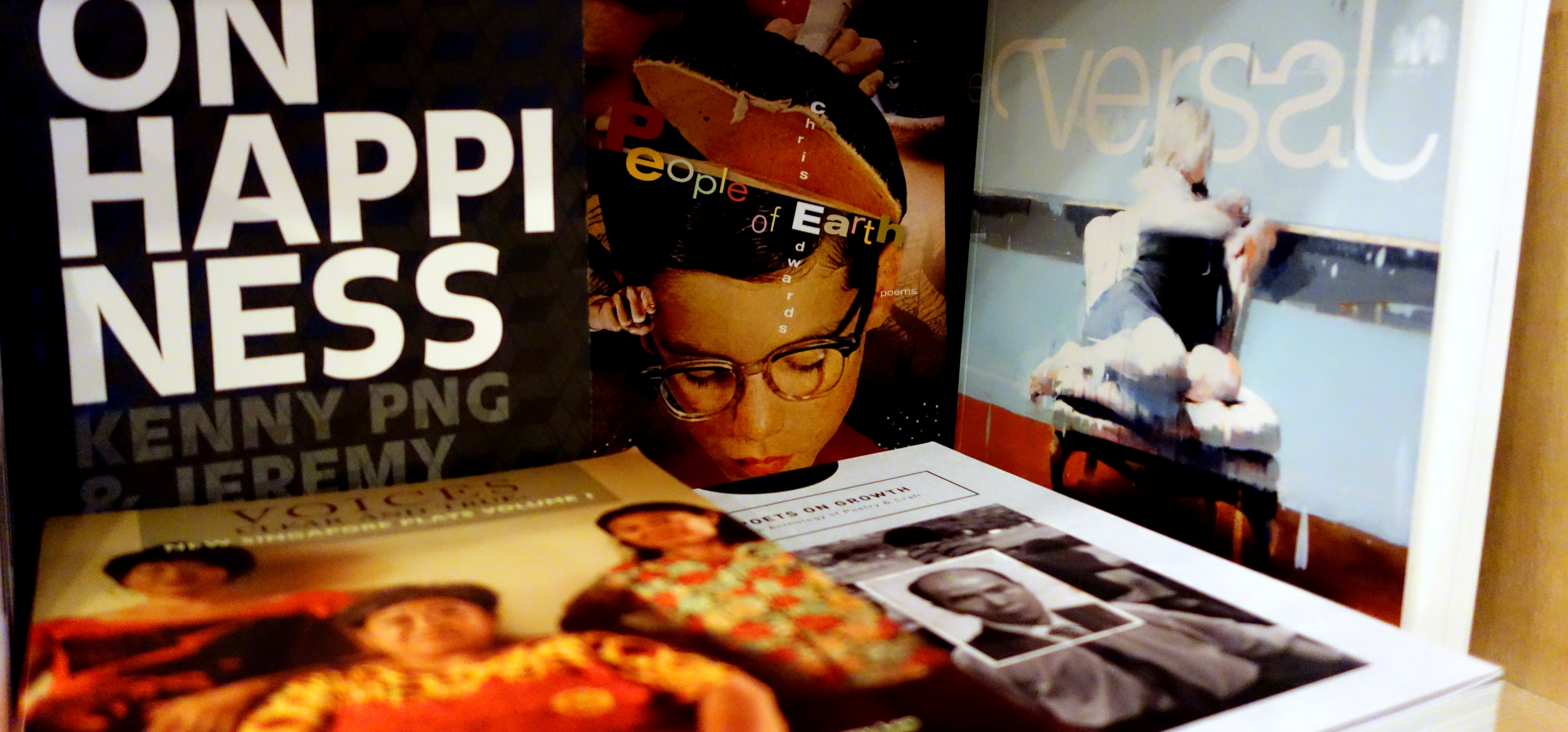
There is always this trend where the big bookstores are treated as bad-ass retail chains, but we are actually not that different. At its core, we are all book sellers… maybe what sets us apart is how good we are as booksellers. In fact, a lot of smaller bookstores have a lot to learn from the bigger bookstores. In the Singapore context, the smaller bookstores could do well to learn from what Kinokuniya has done well.
10. Keep your opening hours consistent
Just operations alone. If you say you are going to open at 10am, you open at 10am. If you say you’ll close at 8pm, you close at 8pm. It’s that rigour and discipline of keeping your store operational.
Book selection: it doesn’t matter if you are big or small. You gotta be good at what you buy. Kino is obviously good at what they buy. Their selection is fantastic. People say that it’s because they are big, but it makes no diff— big or small, if you are good at buying, you are good at buying.
11. Give people something new to discover with interesting merchandise
The bookstore is a place where you go in and you always want to discover something. If people are visiting every month— or every week—you have to make sure you give them something new to discover. It doesn’t have to be a new publication that just got released. It can be a book that was released 10 or 20 years ago, and you allow the audience to rediscover this wonderful book.
This is the experience that all bookstores should try to provide, but a lot of bookstores no longer do that. When the business suffers or doesn’t work, they will throw the blame at readership and reading culture, when more often than not, the blame is the other way round— the business is not just not run well.

12. Foster a “sense of discovery” that keeps people browsing
It’s always merchandizing. That’s the 101 of bookselling— or the 101 of retail. The supermarket does it best. If a bookseller wants to learn how to do merchandising or retail well, learn from a supermarket. More often than not, you end up walking through all ten aisles that the supermarket has to offer when you just went there to buy dishwashing detergent. That’s because they’re good at merchandising. That’s what maybe bookshops should do. Get better at merchandising. Once you’re better at merchandising, you will be assured – that’s basic business.
If the customer can spend more time in your store, then with every single minute that passes, there’s a single higher percentage that the customer will spend. That’s what the supermarket is doing to you. And that’s what a bookshop should be doing to its customers. We want them to discover something new. If you want them to stay longer, you have to give them things to discover. If not, you are obviously not doing a good job.
13. Taking your cue from publishers about the pricing
The publisher sets the price. Technically, bookshops can decide how much they want to sell the books: they can sell high, they can sell low – that’s why prices are not even across the board. But, most bookshops usually follow the recommended retail price.
At Kinokuniya, the prices follow the publisher’s recommendation, and they add on the GST (Goods & Services Tax). Kinokuniya is very protective over how their books are perceived by the public. They don’t want to be seen as a cheap bookstore, and they don’t want to come across as too expensive.

14. Set prices based on market dynamics
Let’s say BooksActually sells the same book as Kinokuniya—same title, new release—and publishers tell us to sell it at $20. Let’s say I decide to be a troublemaker and, to get more sales, I sell it at $15. The moment Kino hears about this, they will go straight to the distributor and say: why is BooksActually selling it cheaper than us? The distributor will come to me and say: Kenny, please make sure you stick to the prices set.
It’s only because Kino is one of the bigger boys and wants to stay that way. They don’t want a price war where I put $15 and they go with $12, then I’ll go $10. So, in that sense, they are a custodian. Our prices are $2 to $3 more just to cover the margins. They won’t tell you this, but Kino will be happy when they see someone sell books more expensive than them, because from a consumer perception, they will say that Kino sells at the best price.
15. Don’t engage in a price war; it hurts everyone!
Kinokuniya can call the shots because of quantity. They have the buying power. But we are lucky that they are a Japanese company so they are very straight-up, and they always deal accordingly; it’s very black and white. They will never allow a price war, which is not a bad thing, it’s actually a good thing. We can get away with promotions by saying it’s a special promotion, but if you do it long-term… it hurts everyone.

16. Minor mark-ups can substantially offset operational costs
(Are your books more expensive than bigger bookstores?) In the long-run, I won’t say there is no choice, but $2 to $3 more per book makes a hell of a difference. So let’s say the markup was $4 more, and let’s say I manage to sell 5 books, so that’s $20/day and, for some strange reason, it sells 5 every day, so that’s $600 which will cover half my utility bills.
You keep breaking down what you earn and what you can cover, for rental… assuming I can earn $900 through a markup, that’s 1/9 of my rental ($8,100). So your brain starts working: if you mark-up this much, how much can you cover? – and you realize the mark-up helps to cover certain things.
However, for the books that we publish ourselves, we don’t charge GST (Goods & Services Tax), so our prices will be slightly lower compared to other stores.
17. Maximise your profit margin for each product
The book trade has suffered from old business models where you take things on consignment and the distributor gives you about 30% of the net profit. You don’t have to pay them anything till you sell the books. This has always been the model as there is little risk— you don’t have to come up with the money first. However, a small bookshop like ours will never get the traffic and sales volume of bigger bookshops, so we decided to buy the books and asked the supplier for 40% instead of 30% per book.

18. Create a visual experience to sell as much as possible
Once we buy the books, not everything will sell—there are hits and misses—but it puts you in the mode of selling. We are very pressurized to sell because it is ours and we can’t return it, so it forces us to be committed to the titles, display them prominently, and use promotions. We try not to shelve all the books: we have them facing outwards for a more visual experience.
We are always looking for titles that are meaningful and worthwhile, and then hope everything sells; after all, we can’t return them, no way man.
By switching the business model, suppliers want cash-upon-delivery or within a week. I keep squeezing for higher margins, and hope that everything that I buy will sell.
But, distributors have even shittier margins than us! Distributors absorb the costs of returned books if they are returned—so they actually prefer to sell you the stock.
19. Explore upstream avenues to generate more value
There were just not enough publishers to begin with, and the fact that there are not enough publishers is an issue because there is great content out there, and if there is great content that is not seeing the light of day, then something needs to be fixed. That’s the reason we publish this much.

20. Seek partnerships with other stable businesses
We consign our books to lifestyle bookstores, Supermama, Kinokuniya. We try to look at entities that have reliable account payables and won’t lead to bad debts and close their door after one year. The business should be there for at least 3 to 4 years.

21. Run events so that people know about your products
The most basic way to keep the bookshop around is to sell a book. You have to sell a lot of books, to begin with. Whatever other things we do—whether it is curating events or creating a space where people interact—to be honest, that doesn’t earn us any money. Most of the time, folks don’t understand that when you run an event, you hope people will spend, but most of the time, people don’t spend. They come, have a good time, and leave.
You have to give people a purpose to come to the bookstore, and the first step is to let them know the books exist, you exist, that this particular author exists, because if they don’t even have that purpose to come, they probably won’t even discover what you have. So you have to take the gamble and organize an event to showcase the author.
The first step is to get people to come, and hopefully they progress to the next step— which is to buy a book from the author—but that’s a 50-50 gamble.
22. Create communities and rapport through your business
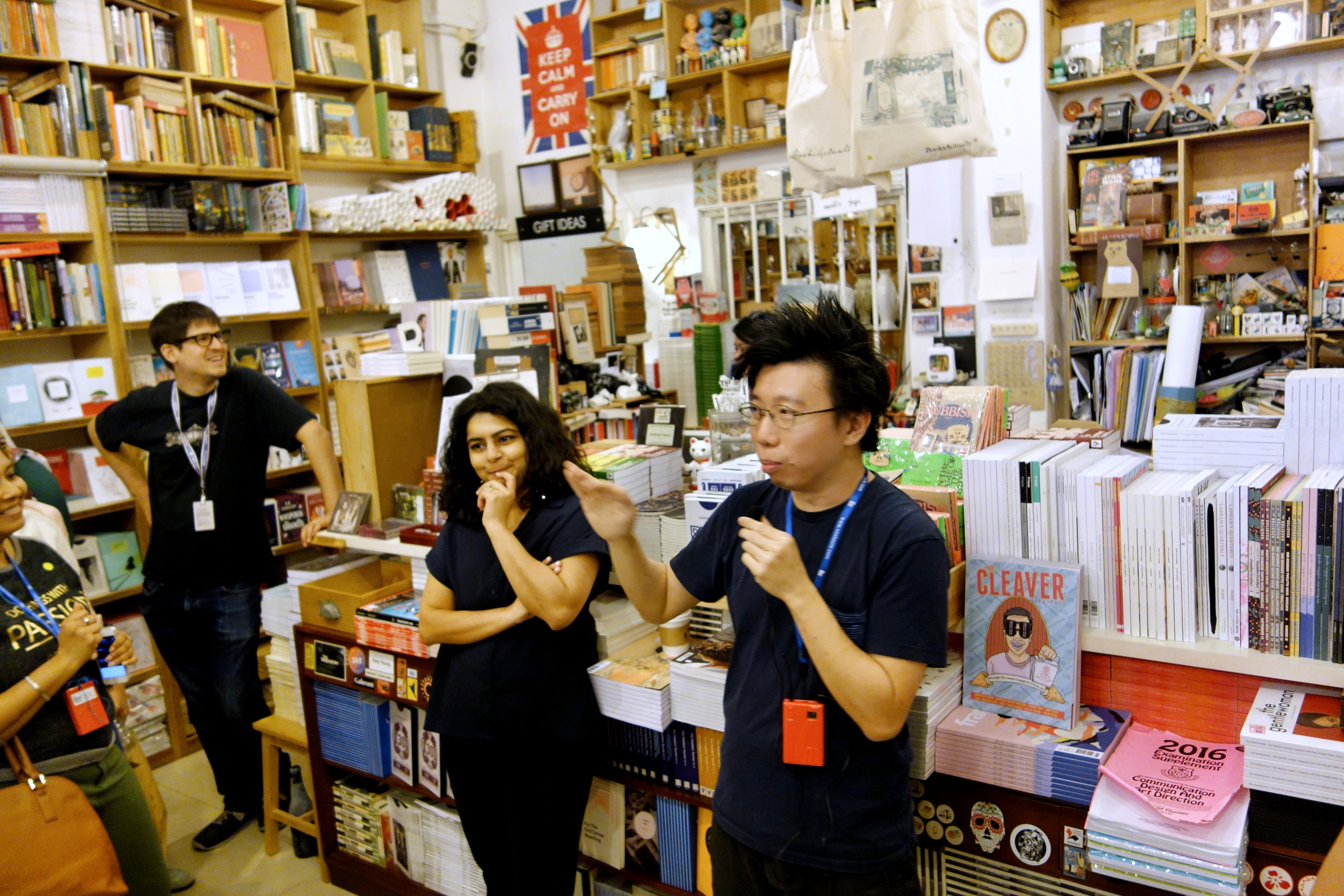
I would say that this is a place where many individuals have found their voices. It’s a place where conversations are struck up, and we also hold different events: books events, music events, art-related events that have attracted different individuals doing different things. Whether you are an artist, a musician, someone who writes, someone who publishes, or another bookseller, this is where people see and meet one another. So I think we provide that common ground of familiarity between two individuals.
The bookstore by right is a non-living entity but, as the years have passed, we realized it is something quite living as well: that it exists to meet all these people who walk in. And I think that’s the tricky part moving forward. It is like a living human being that calls into question that you need to feed it to keep it alive. You need to make sure that it stays around, sticks around, and continues to do the things it does, whether it is holding events or even something as simple as keeping the doors open for people who want to stumble across a bookstore. For that exchange to happen, the bookstore has to stay open. But, for that to happen, we need to feed it, and feeding it throws practical issues into the mix.
23. Learn to be sustainable rather than depend on grants
To feed it means you need to pay the rent, and pay the bills. You need to make sure it’s a sustainable business, not a business that relies on handouts whenever it is in trouble. It needs to be stable on its own, stand on its own two feet; by right, it should never ever have to ask for handouts. And that’s what makes it valuable.
24. Find creative ways to inspire “visual recall” to leave a lasting impression on customers. You want to drive long-term sales.
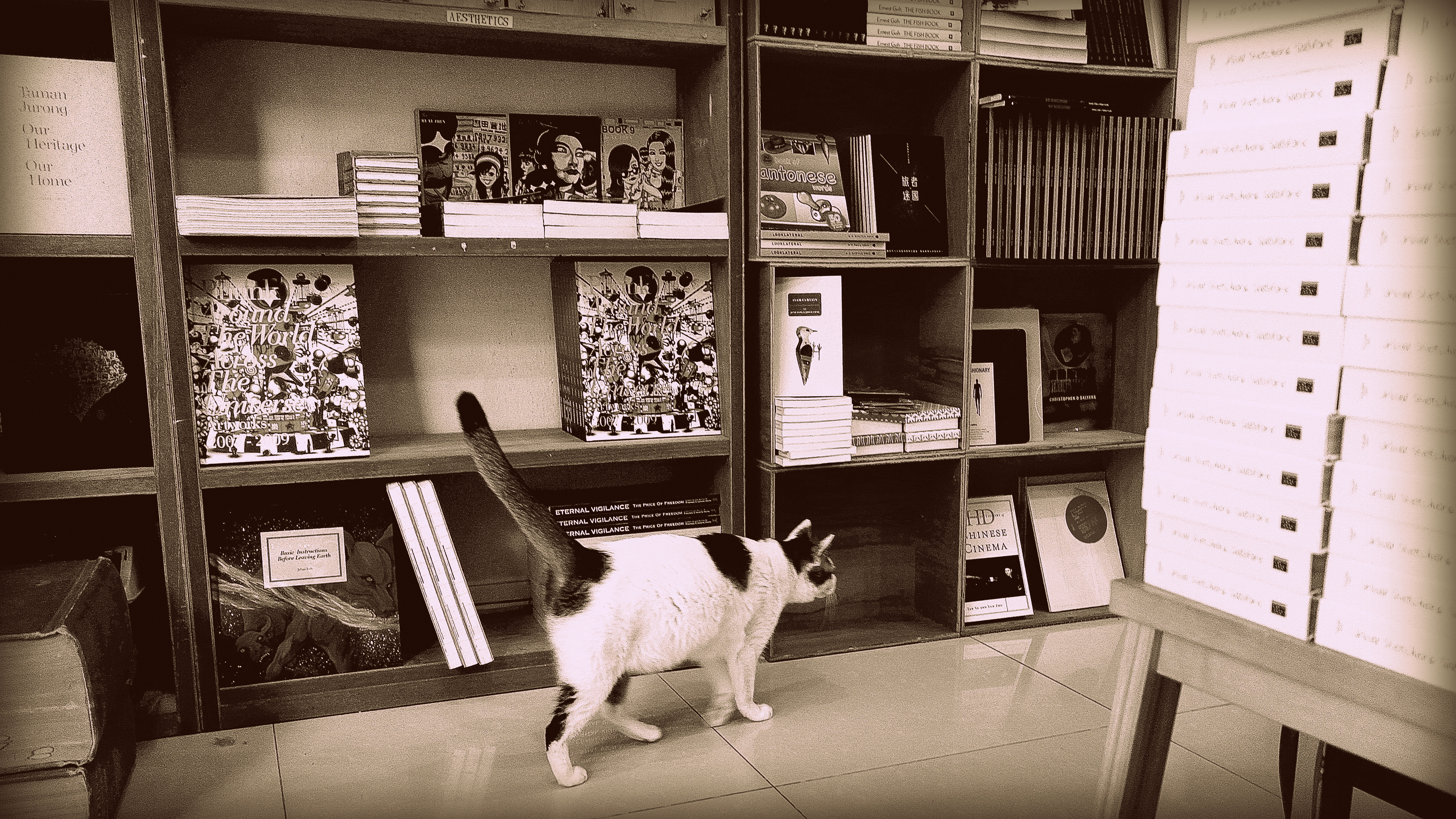
(Besides a bookshop, you have three book vending machines! What inspired you to make them?) It was a one-off custom project, and the cost is just crazy. But, we got a grant from SPRING (Singapore government statutory board) to build three vending machines. We have one outside the shop, at the National Museum of Singapore, and the Singapore Visitor Centre at Orchard.
What we hope is not just increased sales—the sales will only cover the cost of the machines. We’re really hoping for better marketing and visual recall: people will take photos, and others will see it. I need a higher brand recall level. I want sales not on a short-term basis, but long-term.
25. Running a business is tough. So, toughen up.
It’s a 24/7 life. Never—ever—blame your ability to thrive by saying there is no reading culture in your country— because there is, if you only know how to sell a book.
By saying there is no reading culture—that there is no readership in Singapore—then you are slapping my face, because I have been running a bookstore for 12 years— unless I am selling something else, but no, I am selling books to pay the rent. To tell me otherwise, I don’t believe it.
For anybody who wants to go into the trade: if you fail, it’s because you’re not good enough. That’s the harshest thing that anyone can say to anyone. But if you fail, you’re just not good enough, man. If you’re not good enough, then you either decide to continue doing this—and get better, or this is just not for you.

Want to discover the best local authors and other precious reading fuel?
- BooksActually website
- Facebook @BooksActually
Shopkeeper Stories is a photographic documentary of small business owners with their trades around the world, sharing their insights and stories. Follow along on this journey on Facebook, Instagram, Twitter, and LinkedIn @ShopkeeperStories. See you there!


 Shopkeeper Stories
Leave a reply to If the stock is stuck, our cash is stuck | Shopkeeper Stories Cancel reply