We’ll head into the streets of Bali where migration, money, and makanan (food) all mix into a life in motion.
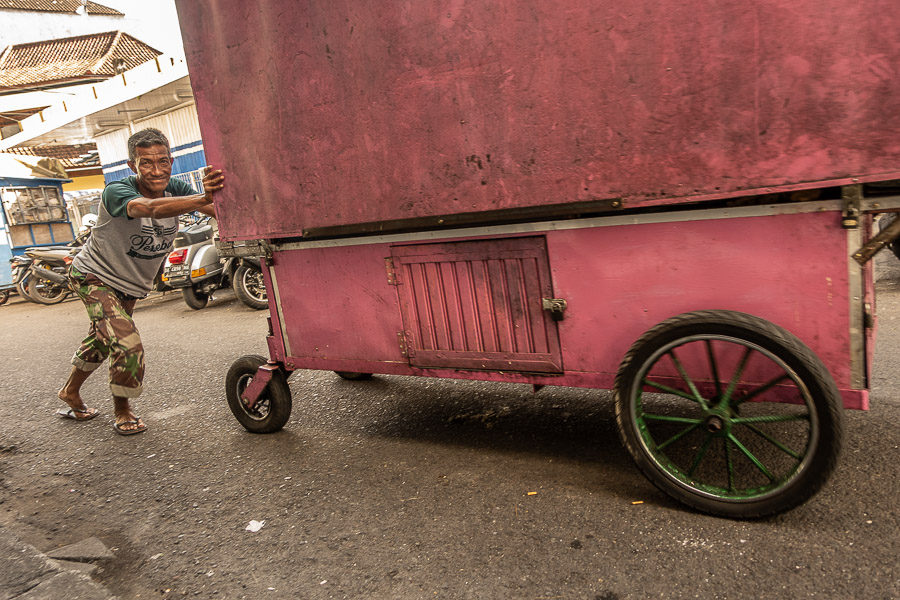
This story is not about street food, but the people behind it: the street sellers.
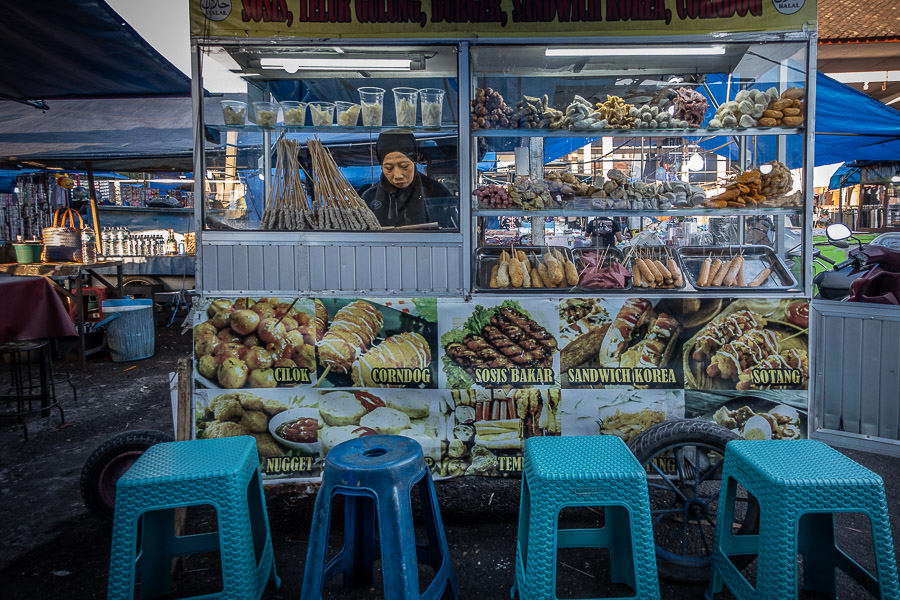
The majority of small businesses die within 3 years. Each stall that you walk past is run by a brilliant entrepreneur.
They’re brilliant, because they found a way to make an independent living. Sometimes, starting with almost nothing.
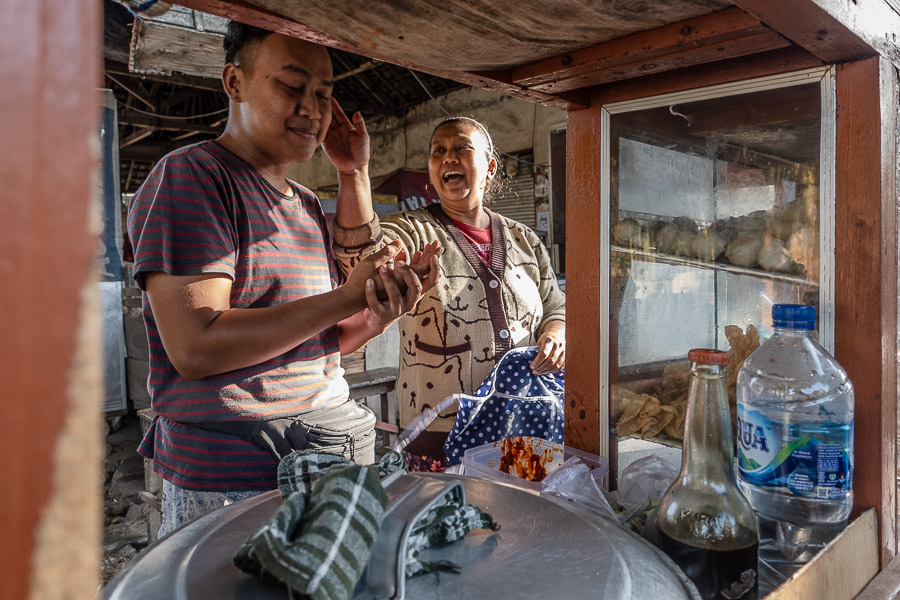
Let’s meet Abdul. He migrated from Malang and began his life in Bali by pushing a cart selling bakso (chicken meatball soup).
He wakes up at 3:00 a.m. to prepare the bakso meatballs, every morning.
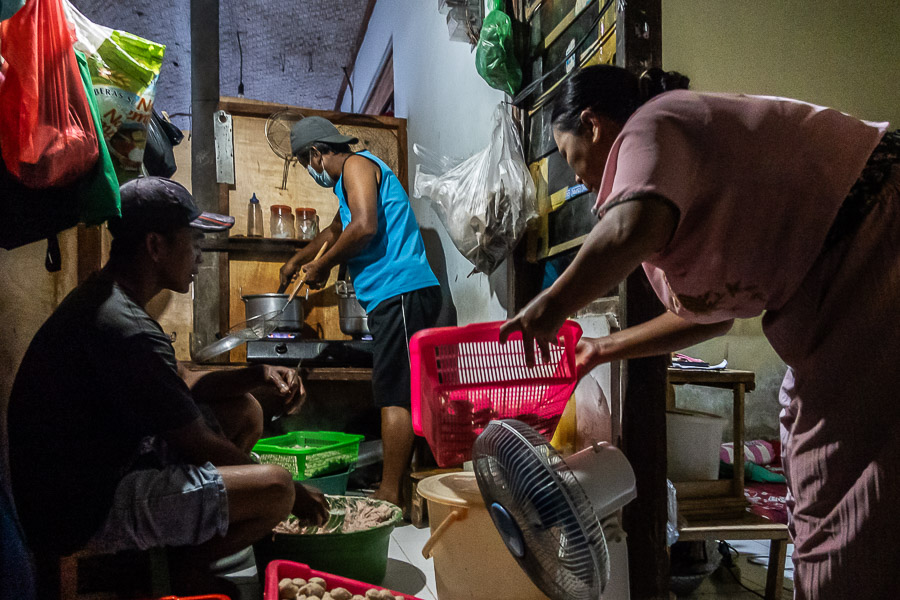
Today, Abdul is the boss of 6 other street vendors who used to live in his village in Malang. He continues to push a cart to sell bakso, too.
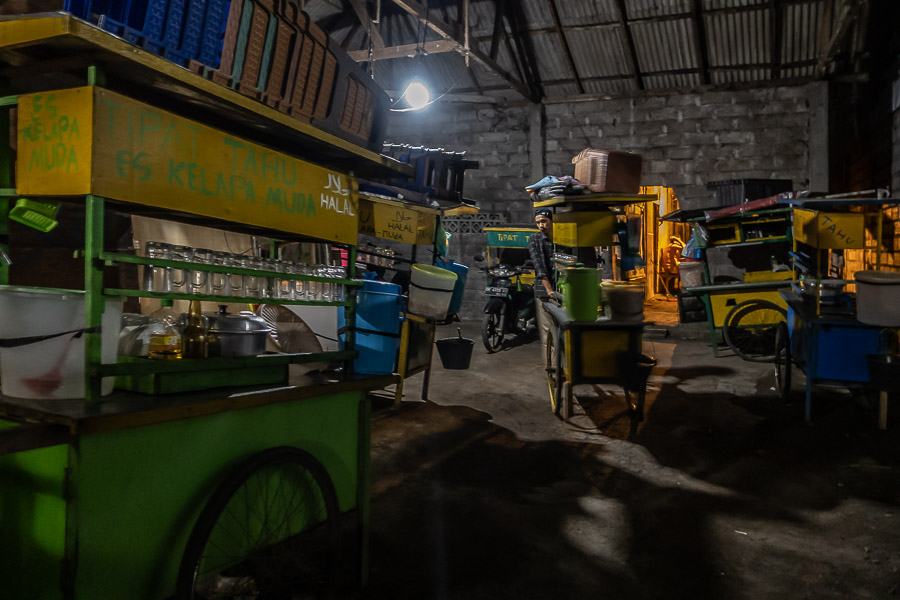
Abdul provides each of his staff with a food cart, something they couldn’t afford on their own as a single cart can cost around IDR 500,000 (USD 30).
In return, they pass him 25% of their revenue. He also offers housing, food, and all the ingredients they need to get started.
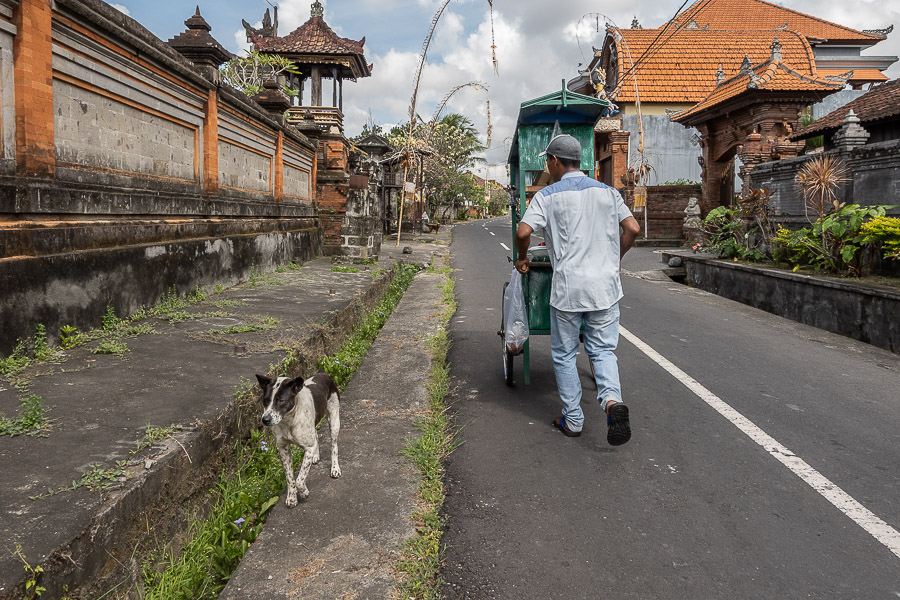
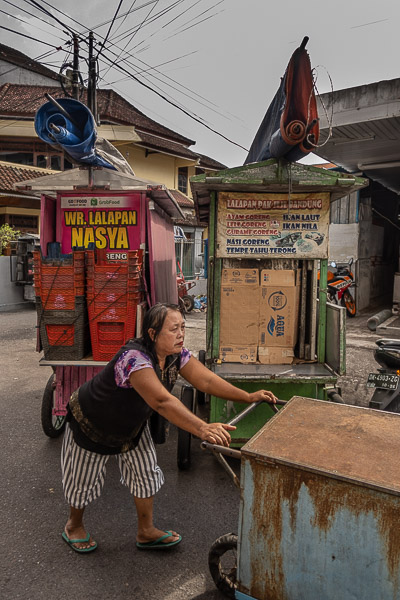
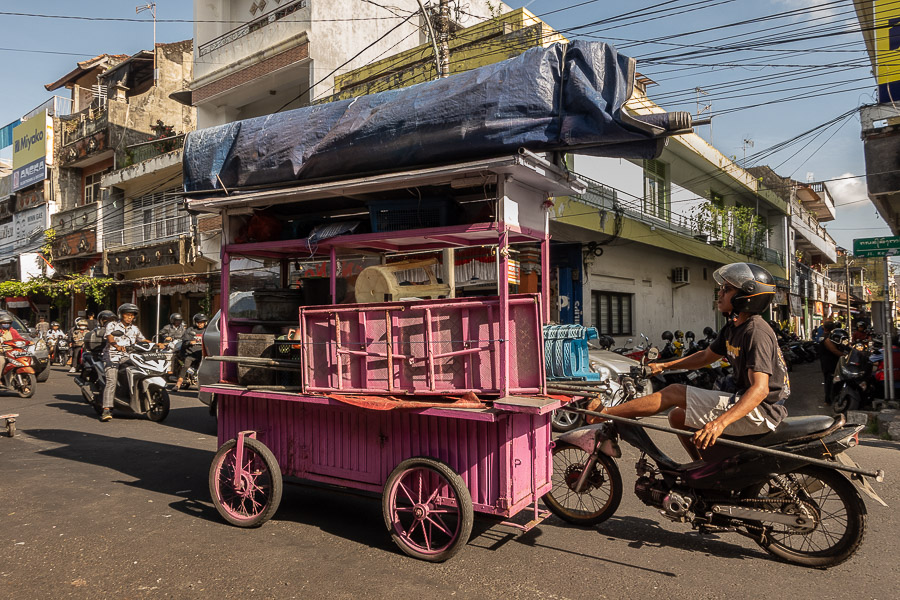
Through this approach, we see how each vendor can create a pathway for others to build their own livelihood.
Sometimes, the vendors transform their ‘magic box’ into a full-fledged restaurant, even offering el fresco dining with seating where friends and couples hang out.
Every night, the restaurant vanishes. The vendor packs it up because, during the day, the space could transform back into a busy bus terminal. They share the space.
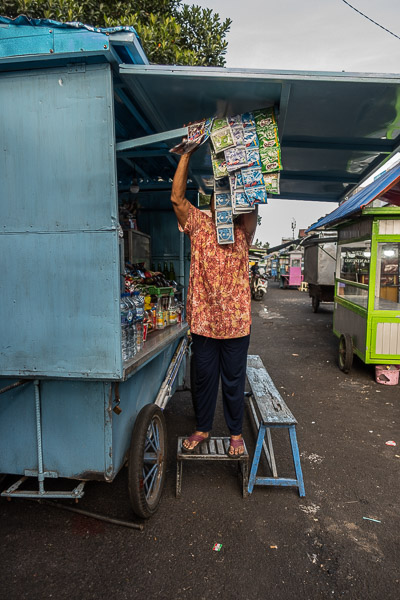
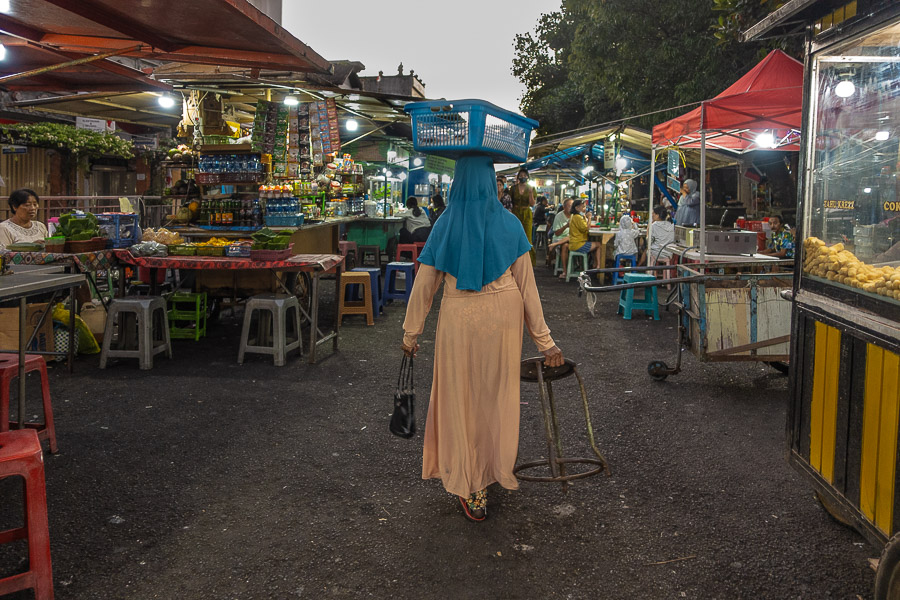
The next day, vendors reconstruct their stalls, emerging with either the dawn or dusk. They vanish & appear daily. Nothing mystical. Just manual.
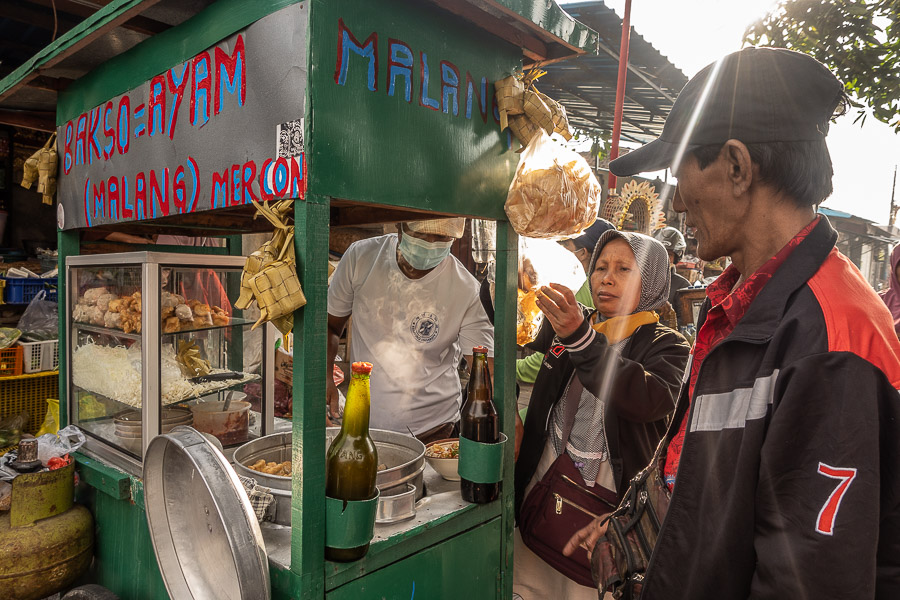
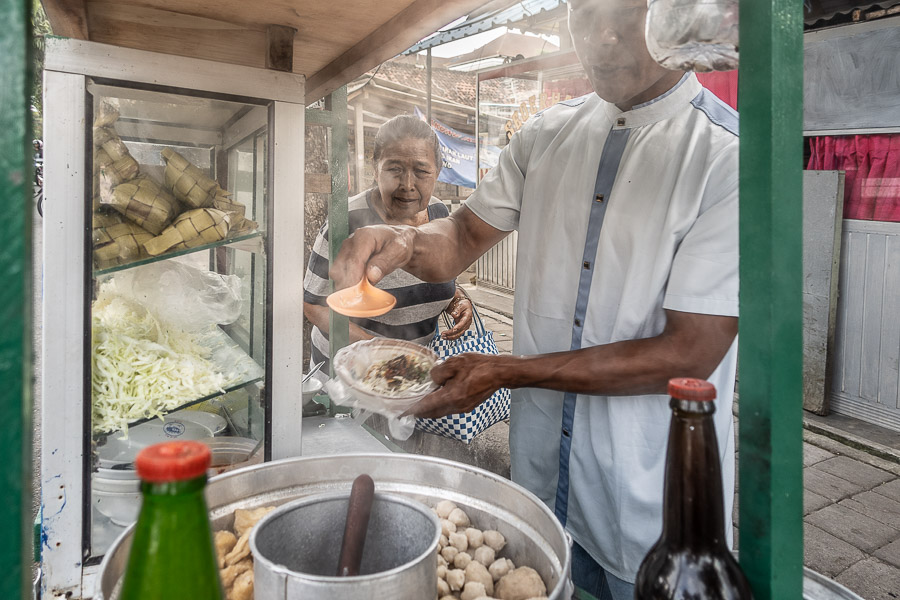
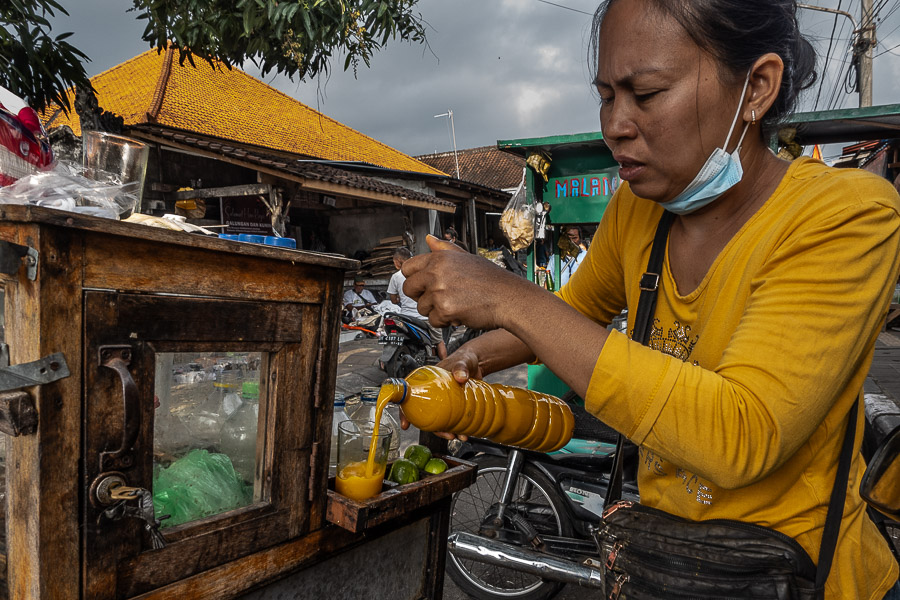
Everything here is in motion — the stove, the chickens, the vendors — even the meals, handed off in small plastic bags as people walk by.
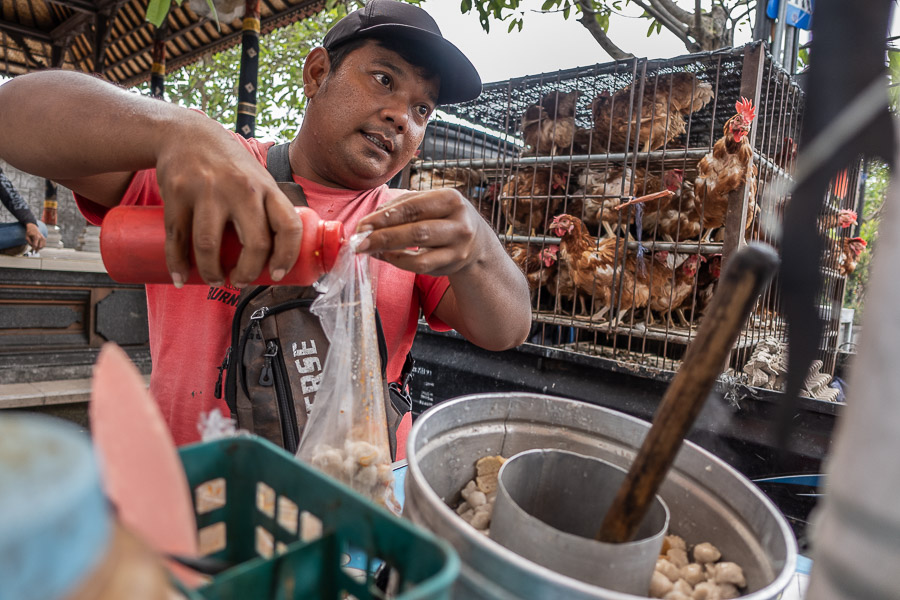
Life here unfolds in motion; an everyday migration.

Where are their hometowns?
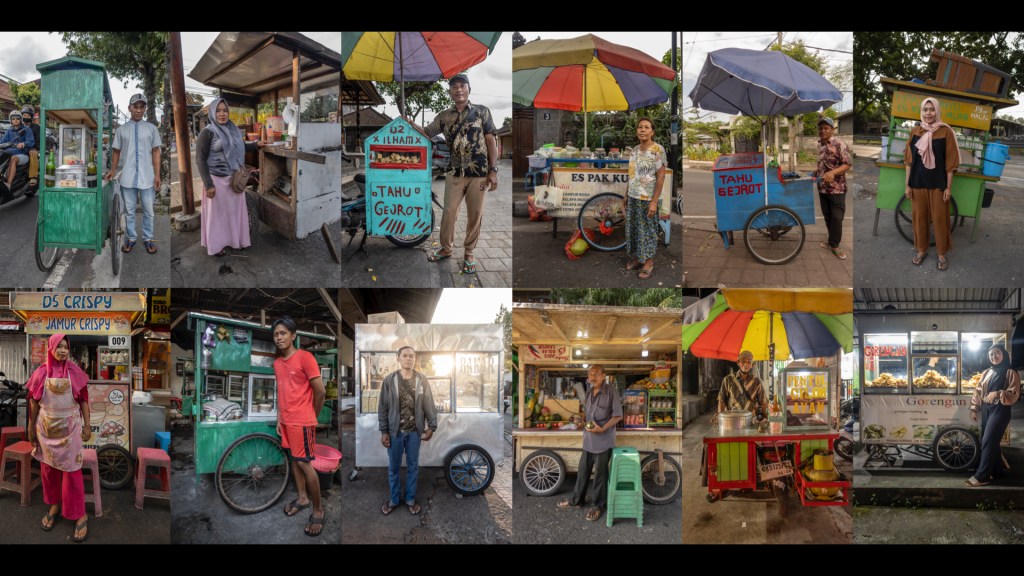
The street vendors hail from all across Indonesia: Malang. Jember. Hebron. Madura. Lombok. Notably, I didn’t meet any vendor from Bali.

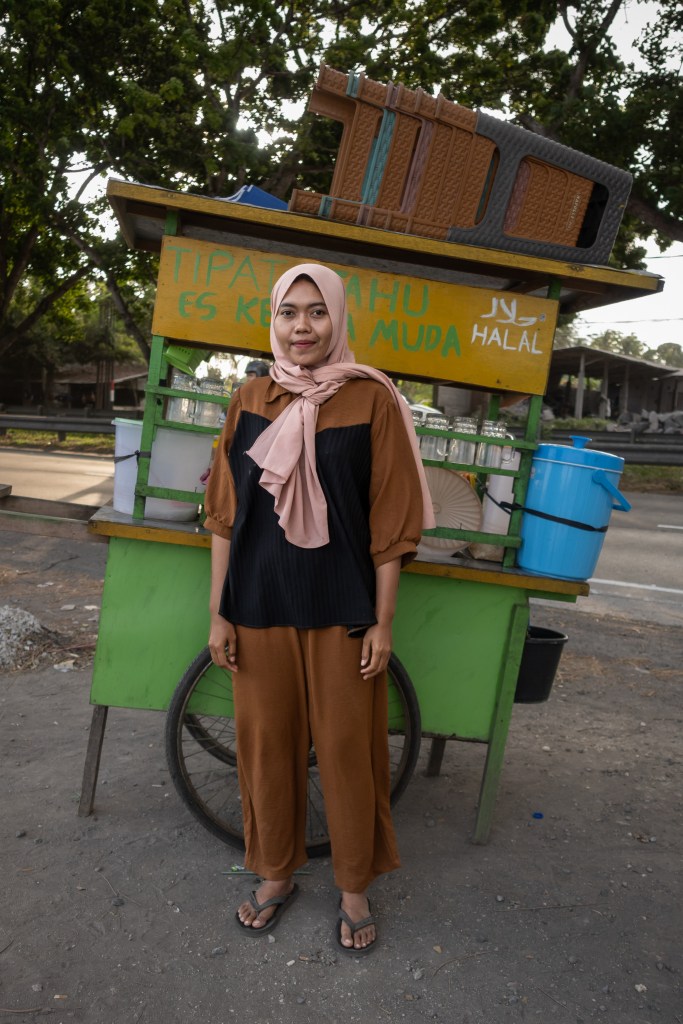

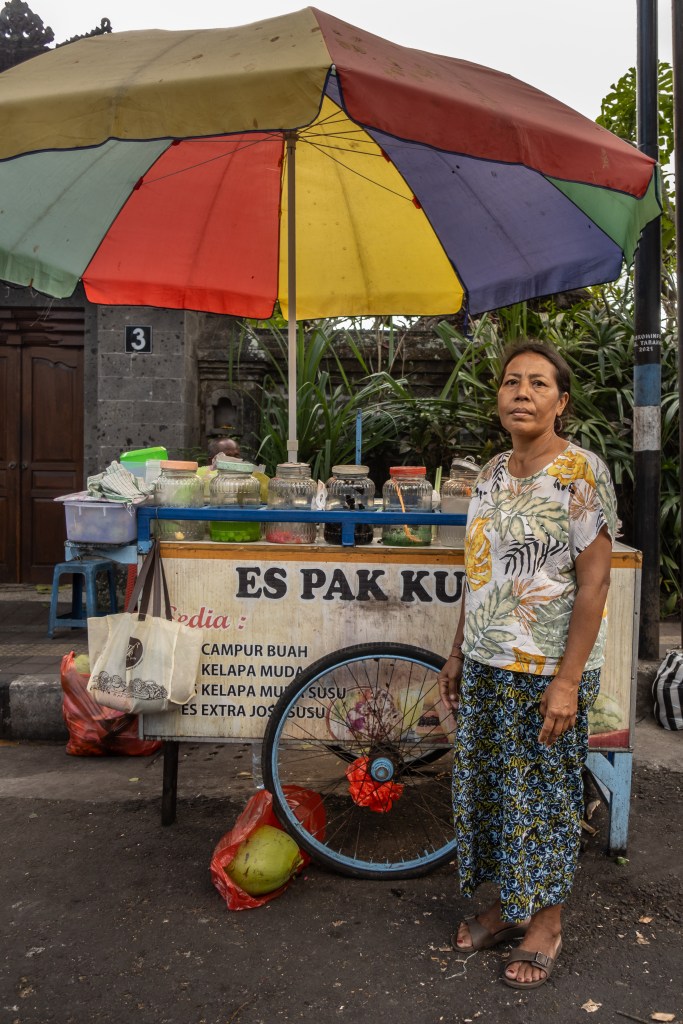


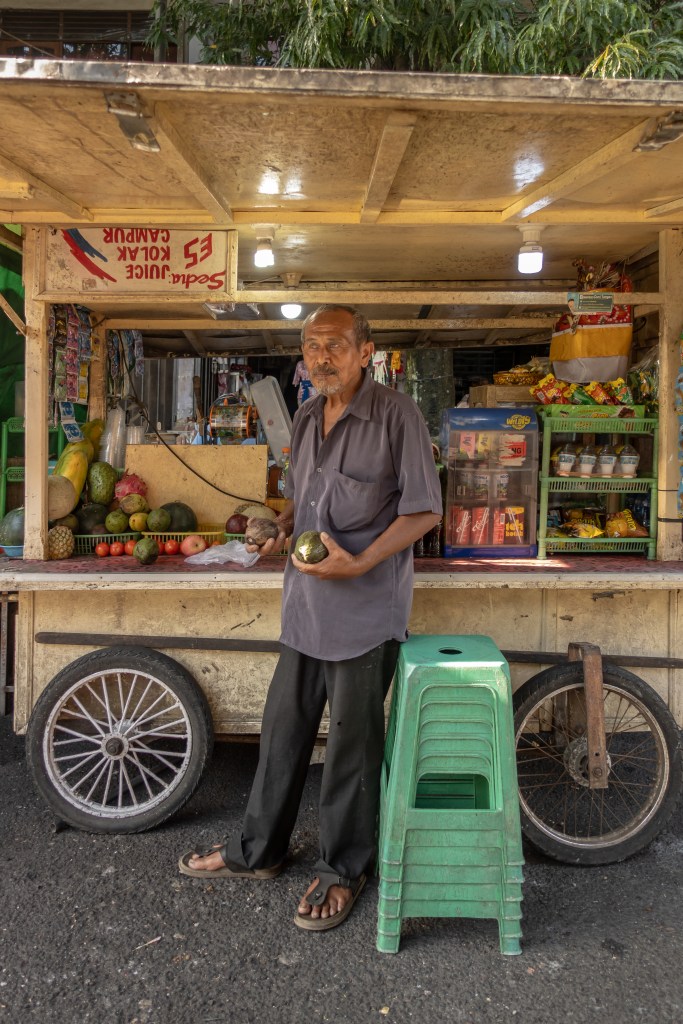

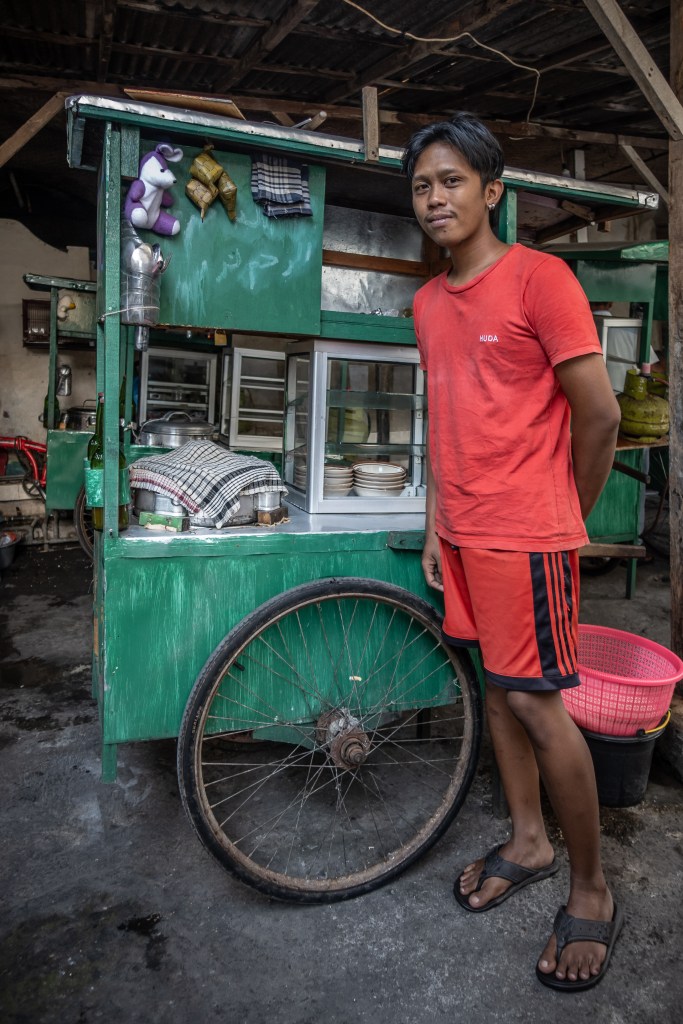


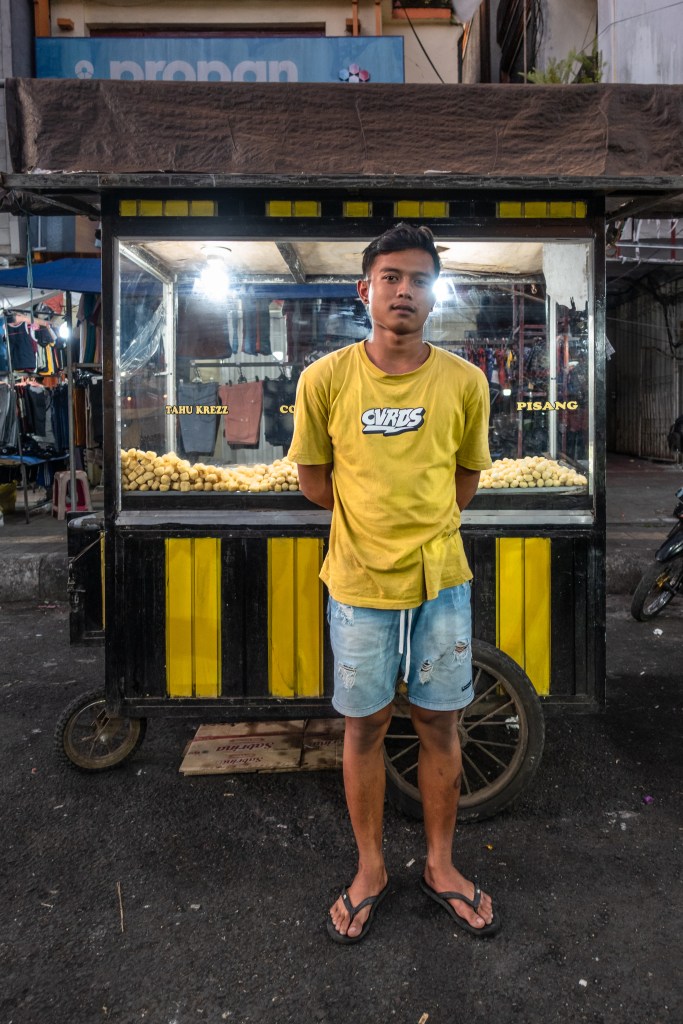


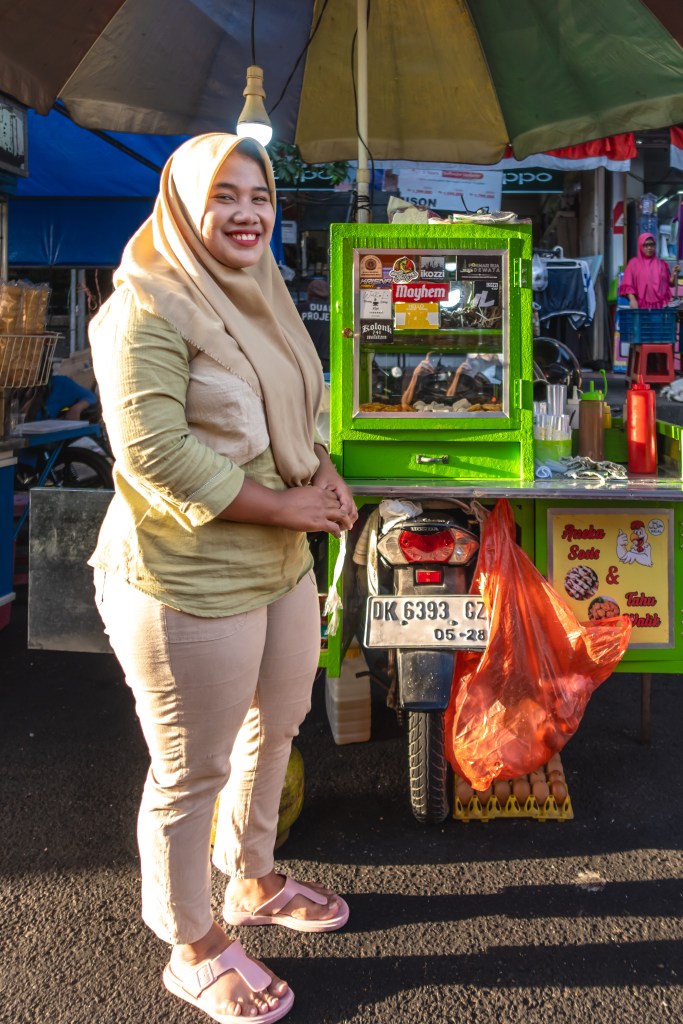


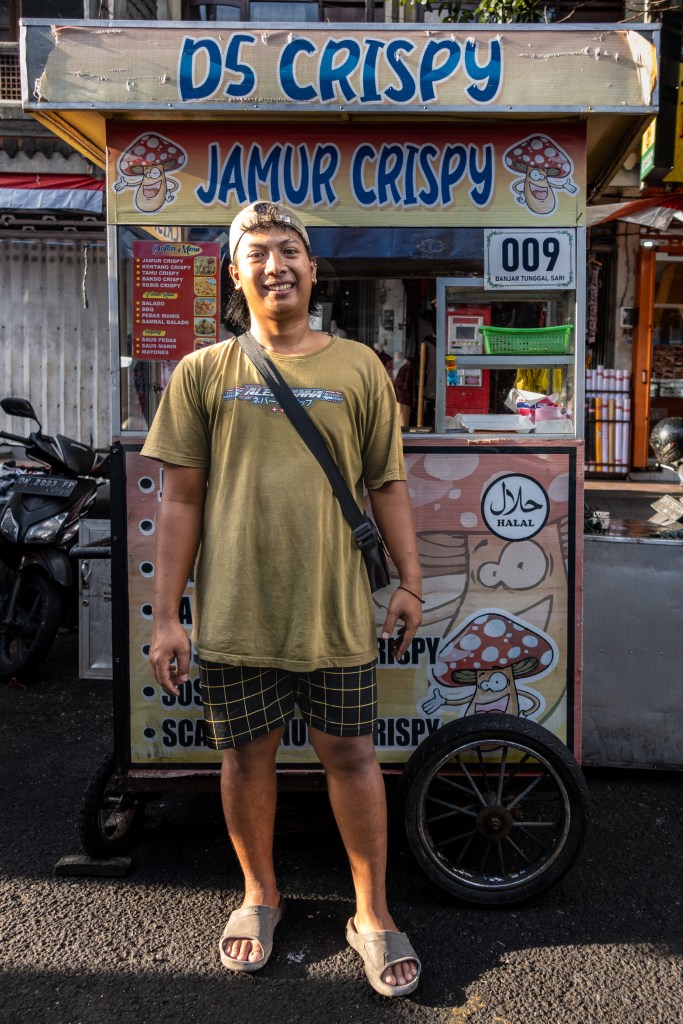
Each seller reflects a story of migration, hope, and a community that is helping their fellow villagers get a foot through the door and up the ladder.
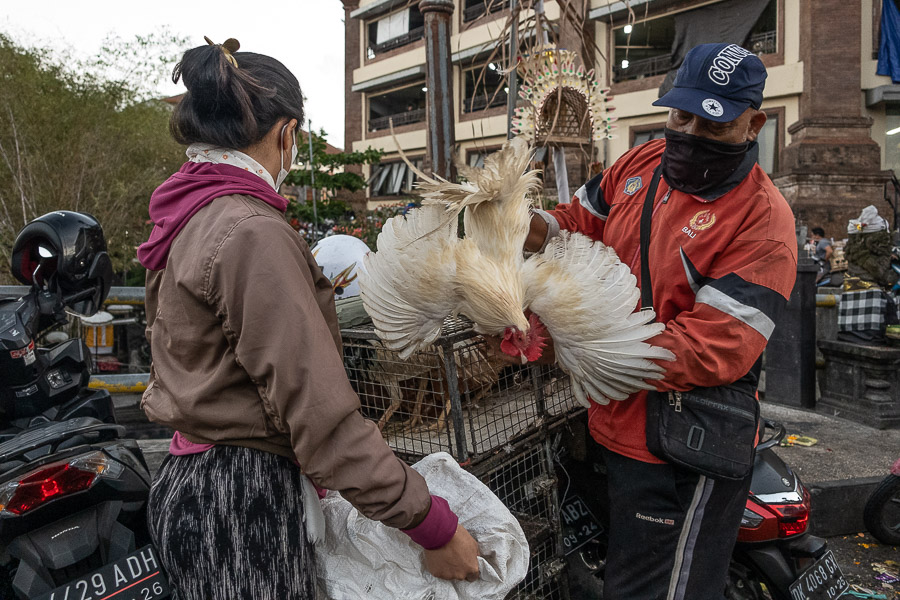
Mashing the chicken costs an additional IDR 160k.
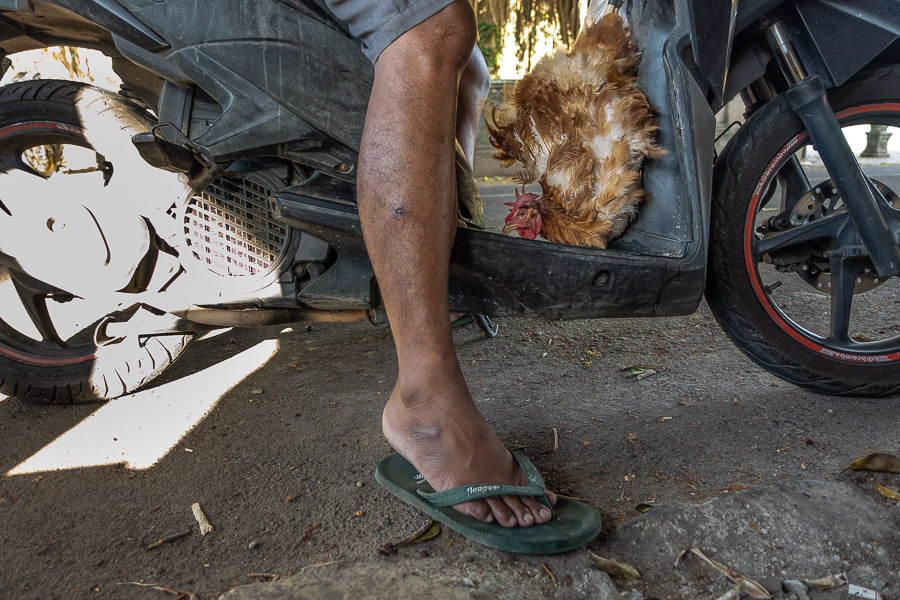
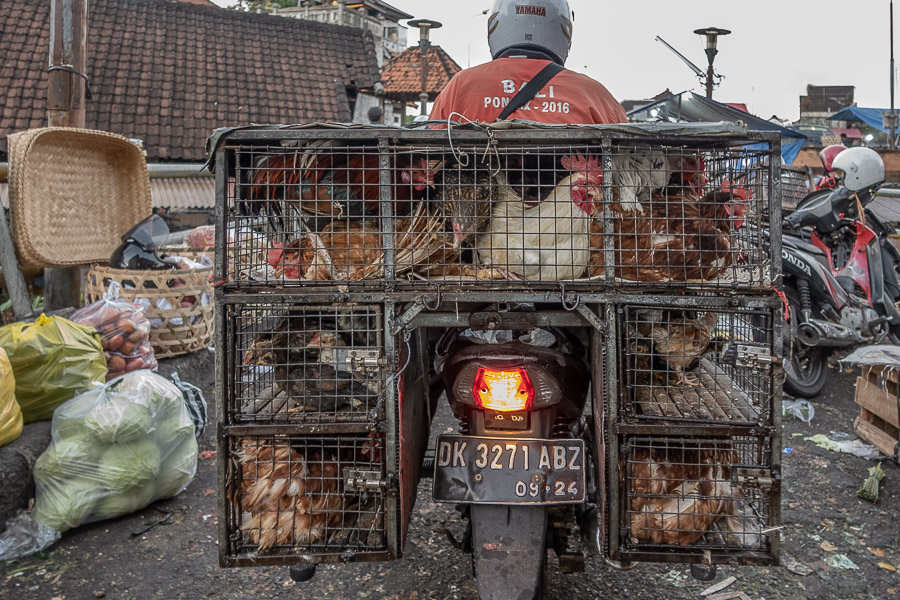
Chickens are also migrating. They hitch a ride from villages to towns every morning.
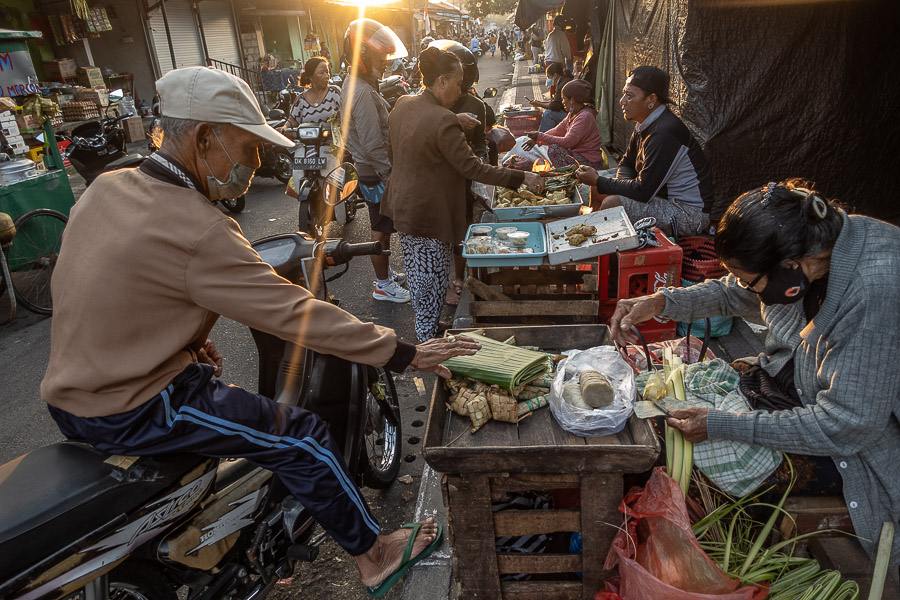
After vendors finish buying ingredients, it comes together beautifully into a dish that you might buy for just IDR 5-10k (USD 0.30-0.60).
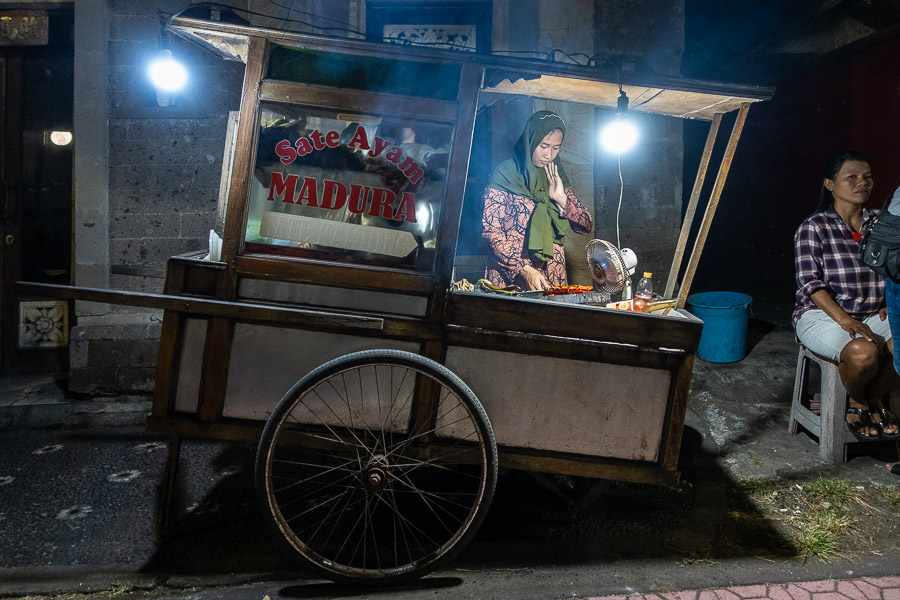
Many of the vendors are migrants who are Muslim, so they don’t serve pork, while much of Bali’s Hindu community avoids beef. In the middle of these traditions, chicken becomes the common thread on the street’s culinary menu.
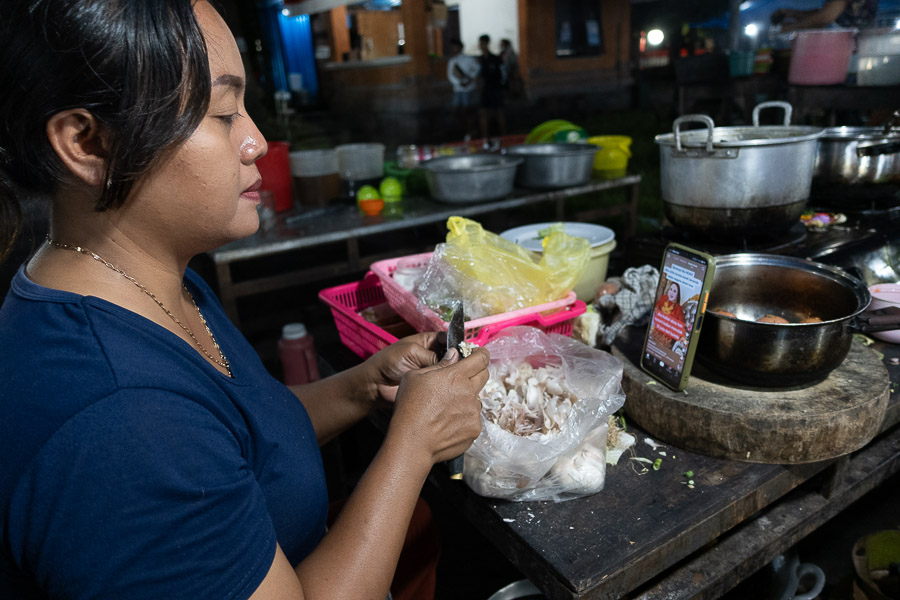
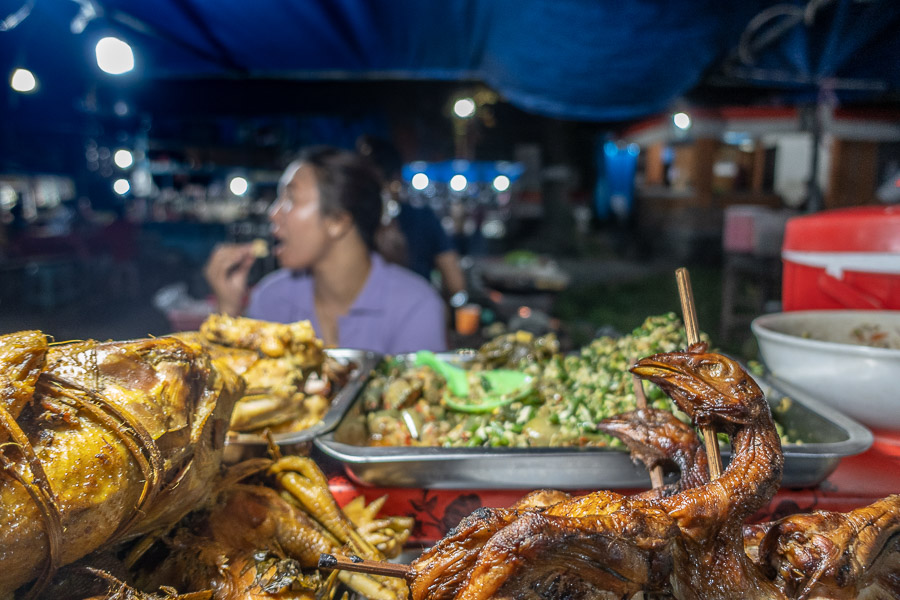
Business can get slow. The biggest fear of restauranteurs around the world is “empty tables”.
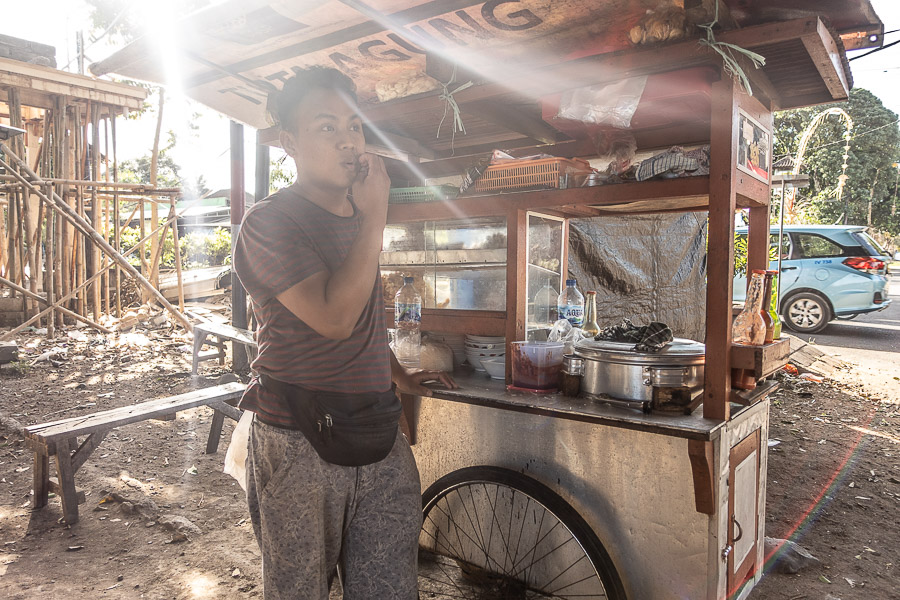
On the bright side, the vendors can move, because they have wheels.
(A useful tip for photographers as well– move if you need to!)
So, what do you do when sales is slow? You move closer to the customers.
What’s one place with lots of customers? Cock-fighting rings! People have money!
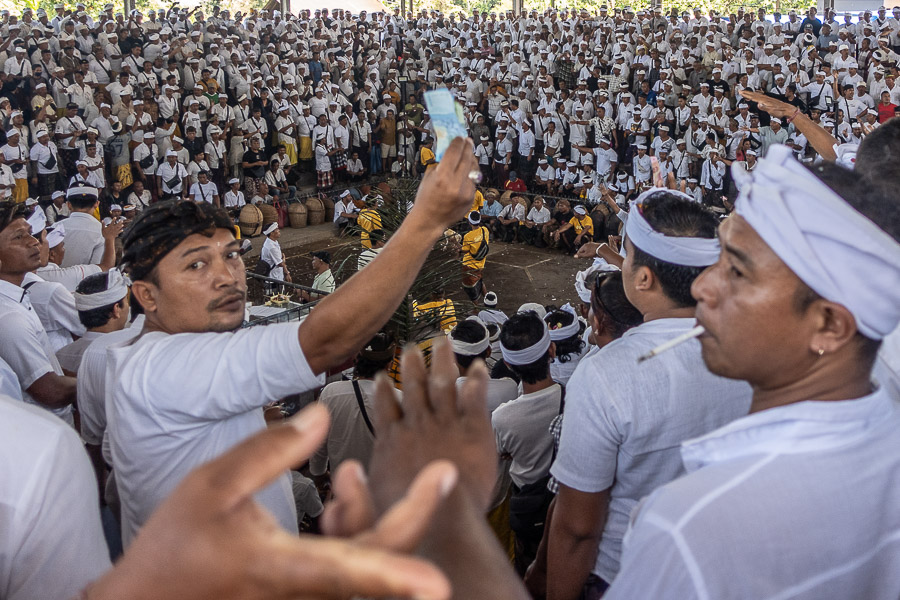
Look closely. Can you find one woman in the arena?
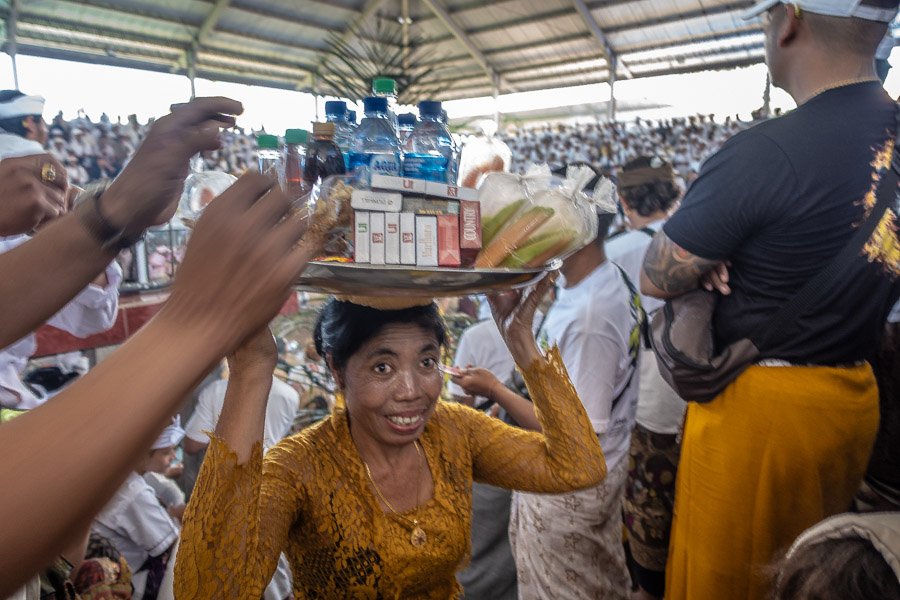
There are no women. Except for the vendor, weaving herself in and out through the crowd. Selling water, cigarettes, fruits.
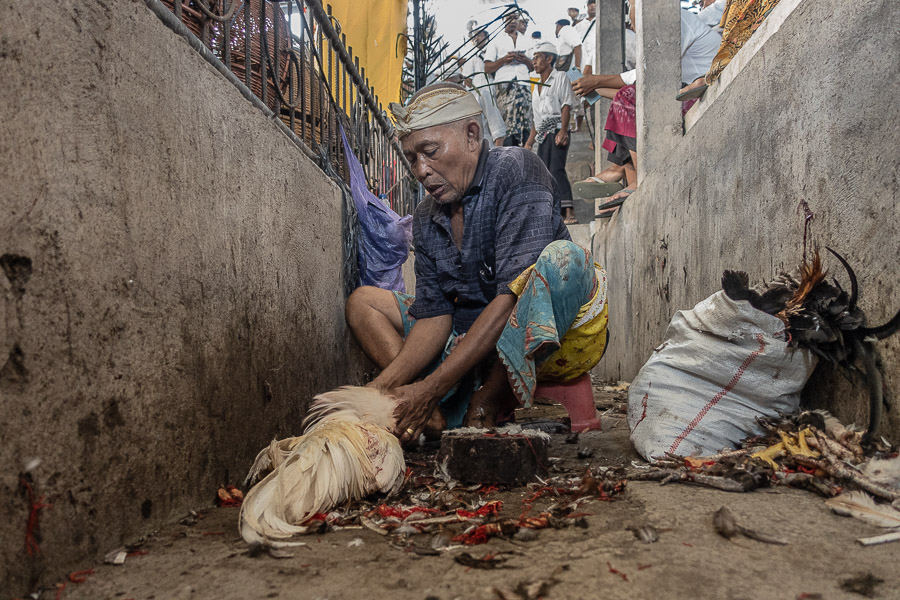
In this sport, you don’t want to lose. The losers get turned into dinner. This presents a unique entrepreneurial opportunity for a butcher to set up a shop. He leaves after the match.
Everything is transient.
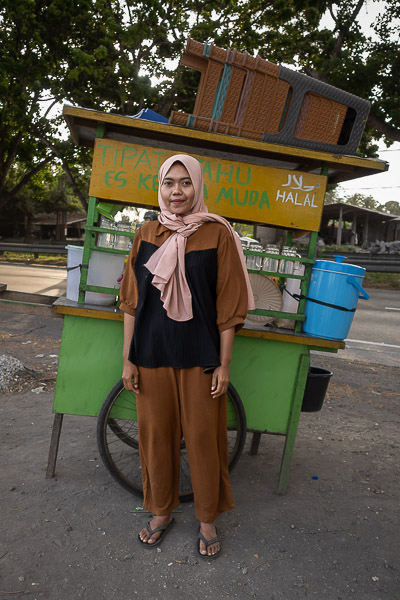
Meet Dewi. She migrated from Lombok to Bali on a four-hour boat ride. Today, she sells tipat tahu (tofu snack) from her street cart along a busy road.
At the end of the day, Dewi packs up her restaurant and pushes it home.

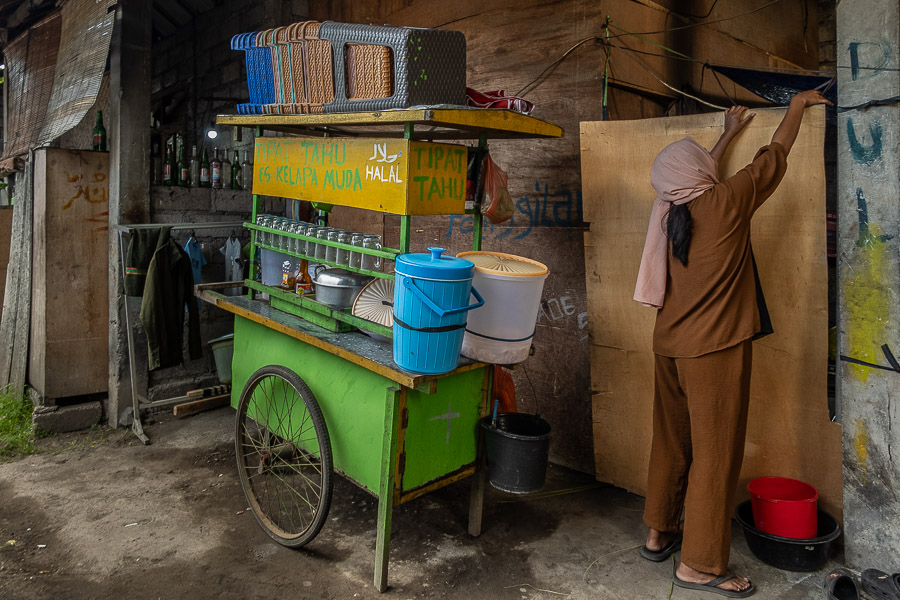
She pays IDR 350k (USD 20) per month for space, and this rent can be a struggle.
She lives with her husband and child in a space hidden behind a grocery shop. Her landlord is the grocery store owner.
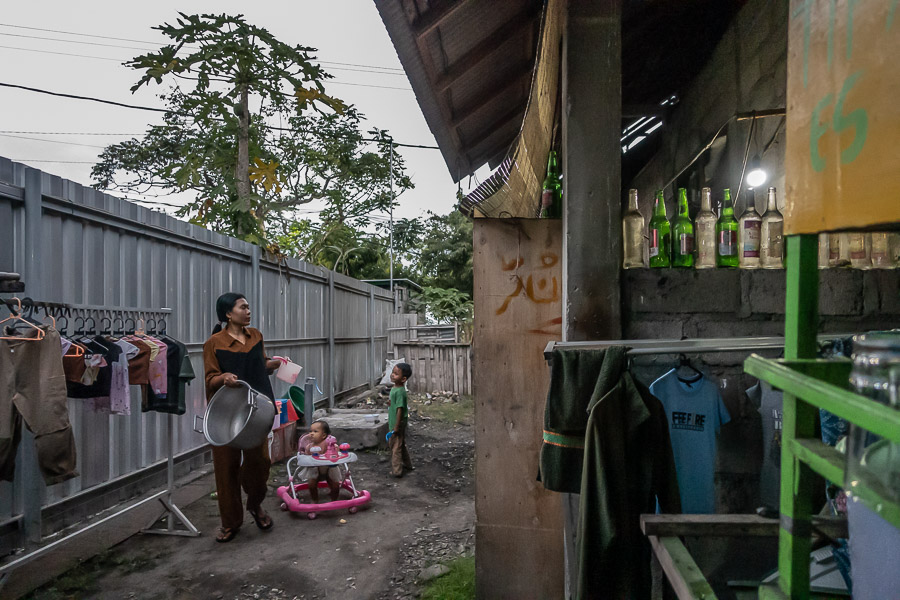
Now, Dewi starts her “2nd shift” at home. The term describes the unpaid household labour women often take on after a full day of work.
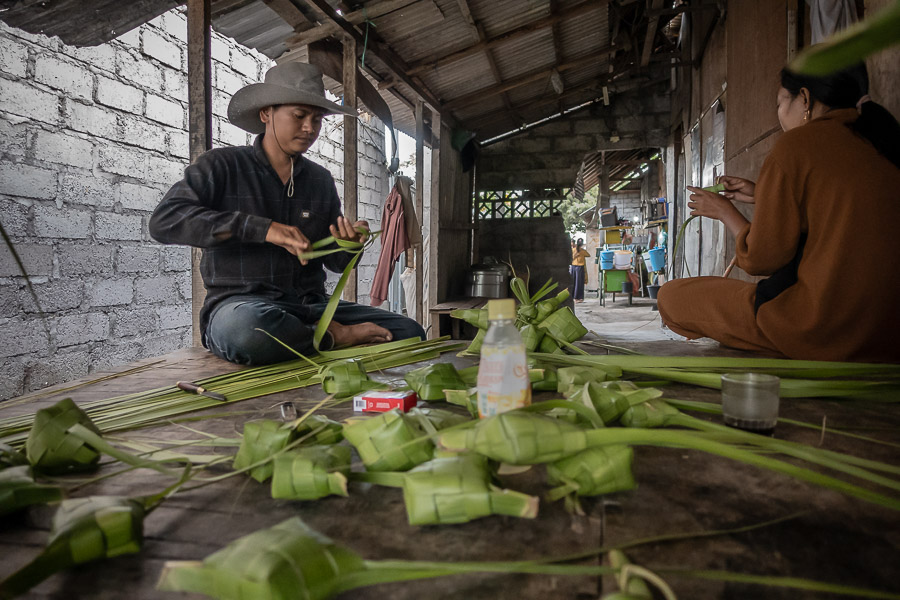
With her husband, she starts preparing rice packets for the next day.
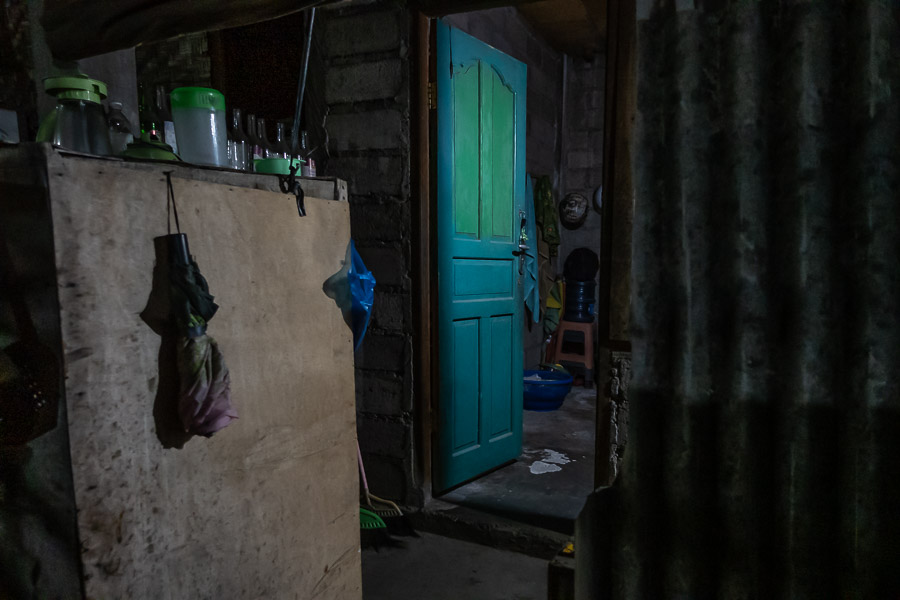
The days are long, the nights can feel longer, and still, there are sparkles of beauty.
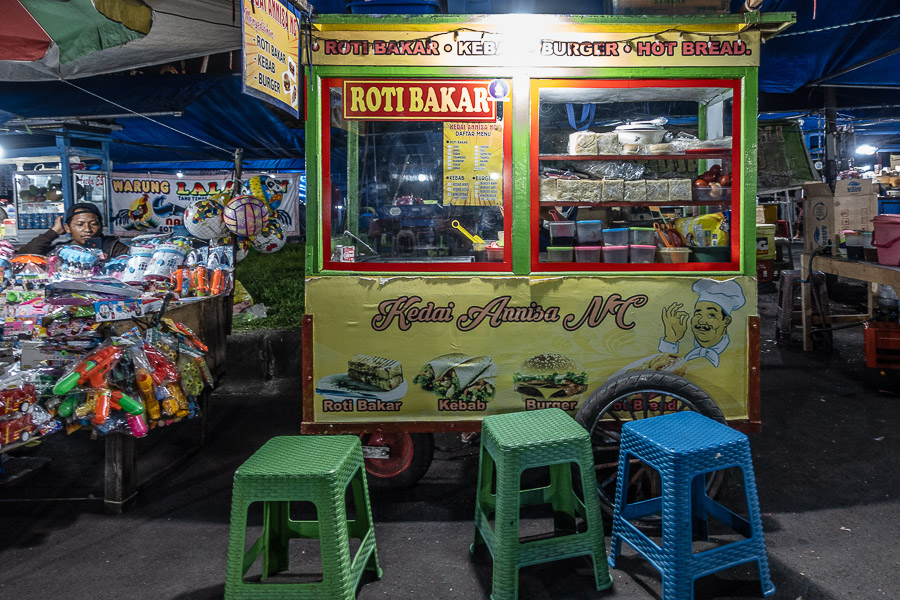
In every cart and rombong—the small handcrafted wooden boxes where vendors store and prepare their ingredients—we see bursts of personality & identity.
It’s an honest livelihood: vendors seeking dignity through autonomy and self-sufficiency, surrounded by a community that supports their upward mobility and their search for both money and meaning, in this beautiful place called Bali.
About this story
The work came together during an eight-day Visual Storytelling Workshop with John Stanmeyer in August 2023. His guidance— and the “editing therapy” sessions where he worked with photographers one by one— shaped the way our photography and stories evolved. What I loved most about those days was that the learning went far beyond photography; it was about feeling the energy, being present, and interacting with the world with more intention. All of the images in this story were made using a Sony RX100 V.
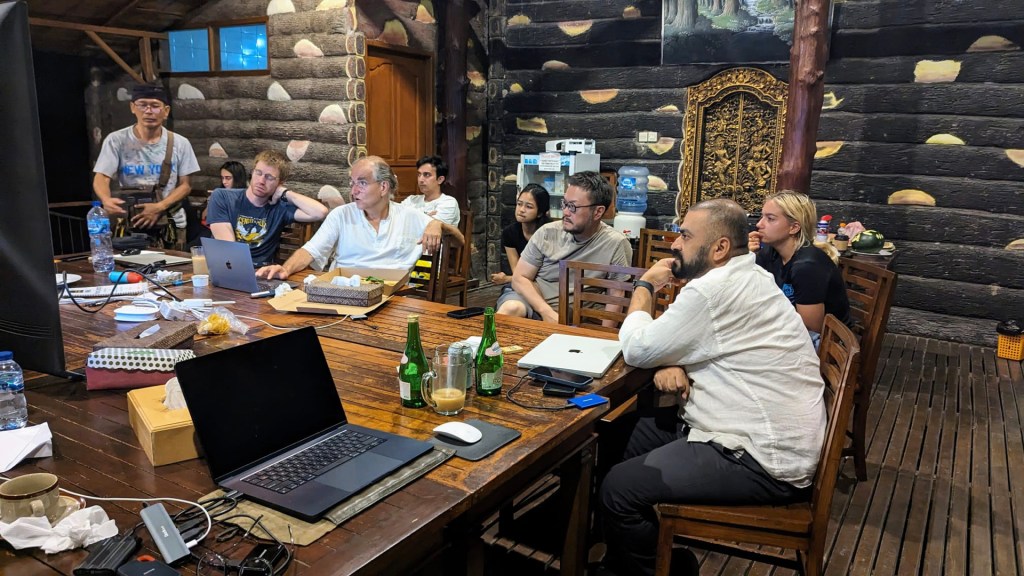
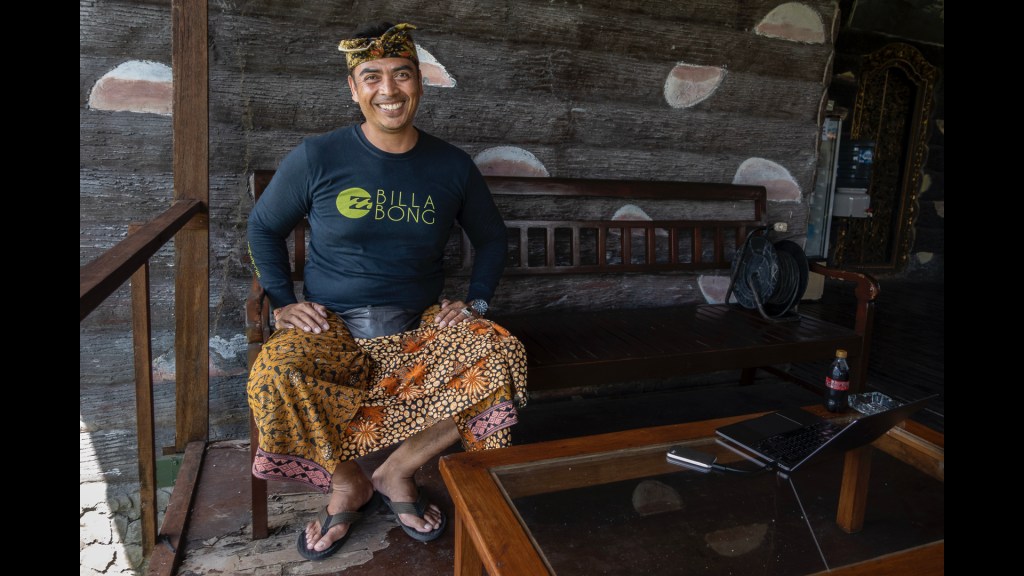
Of course, a story like this would simply not be possible without a fixer who knows the lay of the land, dissolves language barriers, and joins the adventure. I want to express my heartfelt gratitude to Made for being an incredible project guide!
 Shopkeeper Stories
Leave a comment